
Macrodiplosis
Kieffer, 1895
Species Guides
5- Macrodiplosis castaneae
- Macrodiplosis erubescens(Marginal Leaf Fold Gall Midge)
- Macrodiplosis majalis
- Macrodiplosis niveipila
- Macrodiplosis qoruca(Oak Vein Pocket Gall Midge)
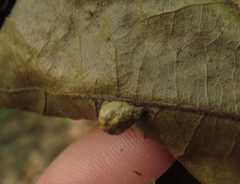
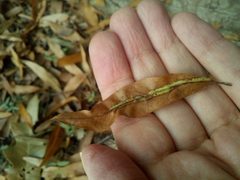
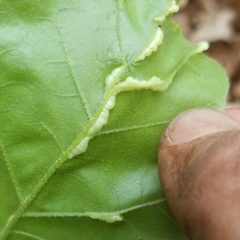
Macrodiplosis is a of gall midges (Cecidomyiidae) comprising approximately 19 described . Species in this genus induce galls primarily on oak (Quercus) leaves. The genus has a Holarctic distribution with records from Europe, Asia, and North America.
Pronunciation
How to pronounce Macrodiplosis: /ˌmækroʊdɪˈploʊsɪs/
These audio files are automatically generated. While they are not always 100% accurate, they are a good starting point.
Identification
Macrodiplosis are distinguished from other gall midge by the of their galls and characters. For example, M. selenis is distinguished from Palaearctic by a combination of morphological characters including the structure of its upwardly folded leaf-margin galls on deciduous oaks. Genetic analysis can support morphological distinctions, as demonstrated by the close relationship between M. selenis and M. roboris despite their geographic separation.
Images
Habitat
Associated with deciduous oak forests and woodlands where Quercus occur.
Distribution
Holarctic. Documented from Japan, South Korea, and European countries (Denmark, Norway, Sweden), with additional records from the northeastern United States (Vermont).
Host Associations
- Quercus serrata - gall induction for M. selenis; upwardly folded leaf-margin galls
- Quercus mongolica - gall induction for M. selenis; upwardly folded leaf-margin galls
- Quercus dentata - gall induction for M. selenis; upwardly folded leaf-margin galls
- Quercus robur - gall induction for M. roboris; similar upwardly folded leaf-margin galls
Behavior
Larvae induce distinct galls on oak leaves. M. selenis creates upwardly folded leaf-margin galls on oak leaves. Gall induction appears to be the primary behavioral characteristic distinguishing this .
Ecological Role
As gall-formers, act as phytophagous herbivores that manipulate plant tissue development. Galls may provide microhabitats for other organisms, though specific or have not been documented in available sources.
Similar Taxa
- Other Cecidomyiidae genera inducing oak gallsDistinguished by gall and location; Macrodiplosis specifically produces upwardly folded leaf-margin galls rather than galls, pouch galls, or other forms
- M. roborisEuropean with similar gall to M. selenis; distinguished by geographic range and subtle morphological differences
More Details
Taxonomic history
established by Kieffer in 1895. Contains approximately 19 described , though this number may reflect incomplete sampling.
Research gaps
Most remain poorly known; details, larval , and ecological interactions are largely undocumented beyond gall and associations for a few well-studied species.