
Lopesia
Rübsaamen, 1908
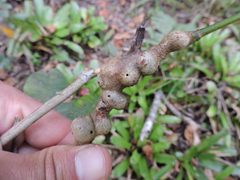
Lopesia is a of gall midges (Cecidomyiidae, Diptera) distributed primarily in the Neotropical region, with most described from Brazil. Species in this genus are specialized gall inducers on diverse plants, with documented associations including Fabaceae (Mimosa, Dalbergia, Lonchocarpus, Andira), Pontederiaceae (Eichhornia), Dilleniaceae (Davilla), and Melastomataceae (Leandra). Gall varies considerably among species, including bivalve-shaped leaf galls, rhizome galls, and galls on reproductive structures. Development involves complete with three larval instars, occurring within the gall, and from galls.
Pronunciation
How to pronounce Lopesia: /loʊˈpiːziə/
These audio files are automatically generated. While they are not always 100% accurate, they are a good starting point.
Identification
Lopesia are distinguished from other Cecidomyiidae primarily by gall and plant association, as morphological characters require examination. Species-level identification relies on male genitalia morphology, larval spatula structure, and pupal characteristics. The genus is most readily recognized in the field by the distinctive gall structures induced on host plants, which are often species-specific. For example, L. eichhorniae produces rhizome galls on aquatic macrophytes, while multiple species induce various bivalve-shaped galls on Mimosa species.
Images
Habitat
occupy diverse including tropical and subtropical forests, savannas (Cerrado), thorn scrub (Caatinga), and freshwater aquatic environments with macrophytes. Specific microhabitats are determined by plant distribution, ranging from terrestrial vegetation to submersed rhizomes in lakes.
Distribution
Neotropical region, with confirmed records from Brazil (São Paulo, Rio de Janeiro, Bahia, and other states). Distribution is closely tied to plant ranges.
Seasonality
Oviposition timing varies by . Lopesia eichhorniae oviposits during the dry period (June to September). Other species show gall lifespan variations of 2-4 months depending on , suggesting staggered seasonal activity patterns.
Host Associations
- Eichhornia azurea (Pontederiaceae) - rhizome gall inducerFirst record of Lopesia in Pontederiaceae; submersible rhizome
- Mimosa gemmulata (Fabaceae) - leaf gall inducerSuper- supporting at least four Lopesia with distinct gall (lenticular, brown , green lanceolate, globoid bivalve-shaped galls)
- Mimosa tenuiflora (Fabaceae) - pinnula gall inducerGalls in Caatinga environment
- Mimosa hostilis (Fabaceae) - gall inducer for multiple Lopesia
- Dalbergia ecastophyllum (Fabaceae) - leaf gall inducer of L. grandis
- Lonchocarpus cultratus (Fabaceae) - leaf gall inducerLopesia sp. induces galls on leaflets
- Andira humilis (Fabaceae) - gall inducer for undescribed Lopesia
- Davilla rugosa (Dilleniaceae) - reproductive structure gall inducerFirst record of Lopesia in Dilleniaceae; of L. davillae
- Leandra ionopogon (Melastomataceae) - gall inducer of L. leandrae
Life Cycle
Complete with , three larval instars, pupa, and . First-instar larvae present during gall induction; second instar during early growth and development; third instar during late growth and development; occurs within the gall at maturation stage; adults emerge from galls. Gall lifespan ranges from 2-4 months depending on and .
Behavior
Larval feeding stimulates plant redifferentiation, division, and elongation, leading to gall formation. Gall induction involves manipulation of plant growth regulators including indole-3-acetic acid. Feeding influences direction of cell elongation, predominantly periclinal, which determines gall bivalve shape. Oviposition timing may be restricted to specific seasonal periods.
Ecological Role
Gall inducers that structurally modify plant tissues, creating protected microhabitats for development. Gall formation alters host plant anatomy, including establishment of nutritive tissue that sustains larvae. Galls may influence local plant dynamics through resource allocation changes in host plants.
Similar Taxa
- Other Cecidomyiidae gall generaLopesia galls may resemble those of Asphondylia, Clinodiplosis, or other cecidomyiid ; distinguished by combination of plant specificity, gall , and internal anatomy including tissue stratification patterns
- Other gall-inducing insect groups (Cynipidae, Psyllidae, etc.)Gall can resemble those induced by or true bugs; distinguished by gall internal structure, presence of larval chamber characteristics, and association with dipteran rather than hymenopteran or hemipteran inducers
Sources and further reading
- BugGuide
- GBIF taxonomy match
- iNaturalist taxon
- NCBI Taxonomy
- Catalogue of Life
- New state record of Lopesia grandis Maia, 2001 (Insecta, Diptera, Cecidomyiidae)
- New species of Lopesia (Diptera, Cecidomyiidae) associated with Eichhornia azurea (Pontederiaceae) from Brazil
- New species of Lopesia Rübsaamen (Diptera: Cecidomyiidae) associated with Andira humilis Mart. ex Benth. (Fabaceae)
- Two new species of Lopesia Rübsaamen (Diptera, Cecidomyiidae) associated with Mimosa hostilis (Mimosaceae) in Brazil
- Lopesia davillae (Diptera, Cecidomyiidae), a new species of gall midge from Brazil associated with Davilla rugosa (Dilleniaceae)
- Biology and development of galls induced by Lopesia sp. (Diptera: Cecidomyiidae) on leaves of Mimosa gemmulata (Leguminosae: Caesalpinioideae)
- Structural and histochemical profile of Lopesia sp. Rübsaamen 1908 pinnula galls on Mimosa tenuiflora (Willd.) Poir. in a Caatinga environment
- Parasitoid impairment on the galling Lopesia sp. activity reflects on the cytological and histochemical profiles of the globoid bivalve-shaped gall on Mimosa gemmulata
- Structural and Nutritional Peculiarities Related to Lifespan Differences on Four Lopesia Induced Bivalve-Shaped Galls on the Single Super-Host Mimosa gemmulata
- Lopesia leandrae (Diptera, Cecidomyiidae), a new species of gall midge associated with Leandra ionopogon (Mart.) Cogn. (Melastomataceae), a native plant to Brazil
- Detection and distribution of cell growth regulators and cellulose microfibrils during the development of Lopesia sp. galls on Lonchocarpus cultratus (Fabaceae)
- The ontogenesis of four Lopesia Rübsaamen (Cecidomyiidae) galls on the super-host Mimosa gemmulata Barneby (Fabaceae) reveals peculiar anatomical traits