
Caryomyia viscidolium
Gagné, 2008
Hickory Sticky Ginger Jar Gall Midge
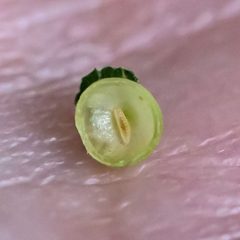
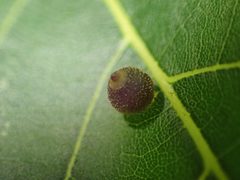
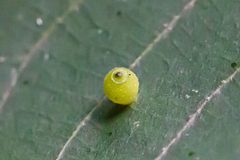
Caryomyia viscidolium is a gall midge described by Gagné in 2008, known for inducing distinctive galls on hickory trees (Carya spp.). The "Hickory Sticky Ginger Jar Gall Midge" refers to the characteristic gall —small, urn or ginger jar-shaped structures with a sticky surface. As a member of the Cecidomyiidae , this species exemplifies the highly specialized plant-insect relationships typical of gall midges. The species has been documented through 341 iNaturalist observations, indicating moderate but growing awareness among naturalists.
Pronunciation
How to pronounce Caryomyia viscidolium: /ˌkærɪoʊˈmaɪə vɪˌskɪdoʊˈliːəm/
These audio files are automatically generated. While they are not always 100% accurate, they are a good starting point.
Identification
Distinguished from other Caryomyia by gall : the sticky, ginger jar-shaped galls on hickory leaves are diagnostic. Similar species C. caryaecola produces smooth, non-sticky galls; C. tubicola produces tubular galls on leaf petioles or midribs. C. holotricha produces hairy, non-urn-shaped galls. Examination of gall surface texture (viscid vs. glabrous or pubescent) and overall shape allows field identification. identification requires microscopic examination of genitalia and is not practical for field use.
Images
Appearance
are minute flies, typical of Cecidomyiidae, with reduced wing venation and long, bead-like . The is primarily recognized by its induced galls rather than adult . Galls are small (approximately 3–6 mm), urn-shaped to globular with a constricted opening, greenish to reddish in color, and covered with a viscid (sticky) secretion that gives the species its name. Larvae are small, legless, and maggot-like, developing within the gall tissue.
Habitat
Associated with deciduous forests and woodlands containing hickory trees (Carya spp.), particularly shagbark hickory (Carya ovata) and bitternut hickory (Carya cordiformis). Galls form on the upper surface of leaflets. The requires mature hickory stands with sufficient leaf area to support gall development.
Distribution
Eastern North America, corresponding to the native range of its Carya . Documented from the northeastern United States through the Midwest, extending southward along the Appalachian range. Specific state/province records are limited due to the species' recent description and reliance on gall identification.
Seasonality
occurs in spring, coinciding with hickory leaf flush (typically April–May). Gall formation is visible from late May through summer. Larvae develop within galls through summer, with mature larvae exiting galls in late summer to early fall to pupate in soil. stage is the pupa in soil.
Diet
Larvae feed on nutritive tissue induced within the gall; the plant tissue is modified by larval secretions to form a specialized food source. do not feed or feed minimally on nectar or honeydew (specific feeding habits of adults unconfirmed for this ).
Host Associations
- Carya ovata - primary , shagbark hickory
- Carya cordiformis - secondary , bitternut hickory
- Carya - -level association with hickories
Life Cycle
are deposited on expanding hickory leaves. Larvae induce gall formation upon hatching, developing through three instars within the protected gall chamber. The gall provides both shelter and modified nutritive tissue. Mature third-instar larvae exit through the gall's opening, dropping to the soil to pupate. occurs in the soil, with emerging the following spring. (one per year).
Behavior
Larvae are sedentary, remaining within the gall throughout development. The sticky gall surface may function in defense against or by trapping small arthropods. are weak fliers, typically remaining near trees. Mating and oviposition occur on or near hickory foliage during the brief adult period.
Ecological Role
As a gall inducer, modifies hickory leaf tissue, creating microhabitats that may be used by or secondary occupants. Galls represent a sink for plant nutrients and may marginally affect tree , though impacts are generally minor. Serves as prey/ host for specialized (specific parasitoids unconfirmed for this but expected based on patterns).
Human Relevance
Of minor economic significance; galls may cause aesthetic concern but do not substantially harm hickory trees. The is of interest to naturalists and entomologists studying gall biodiversity. reflects the distinctive appearance that facilitates citizen science documentation.
Similar Taxa
- Caryomyia caryaecolaProduces similar urn-shaped galls on hickory, but galls are smooth and non-sticky; gall surface lacks viscid secretion.
- Caryomyia tubicolaForms tubular or spindle-shaped galls on hickory petioles and midribs, not on leaf blades; galls are not urn-shaped.
- Caryomyia holotrichaProduces globular, densely hairy galls on hickory leaves; galls are pubescent rather than viscid and lack the ginger jar constriction.
More Details
Nomenclatural note
The specific epithet 'viscidolium' derives from Latin 'viscidus' (sticky) and presumably 'folium' (leaf), referencing the sticky leaf galls. Described by Raymond Gagné, the foremost authority on Cecidomyiidae, in 2008, indicating relatively recent taxonomic recognition.
Citizen science value
With 341 iNaturalist observations, this demonstrates how gall enables reliable identification by non-, contributing to distributional knowledge that predates formal taxonomic description.