
Caryomyia striolata
Gagné, 2008
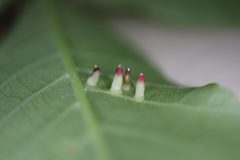
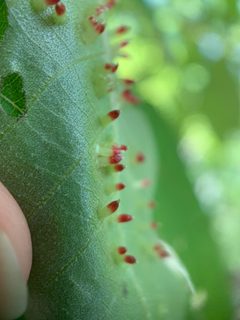
Caryomyia striolata is a of gall midge in the Cecidomyiidae, described by Gagné in 2008. It belongs to a specialized in inducing galls on hickory and pecan trees (Carya species). As a recently described species, detailed biological information remains limited.
Pronunciation
How to pronounce Caryomyia striolata: //ˌkæɹi.oʊˈmaɪə ˌstraɪoʊˈlɑːtə//
These audio files are automatically generated. While they are not always 100% accurate, they are a good starting point.
Identification
Distinguished from other Caryomyia by gall and association; are minute, delicate flies with reduced wing venation characteristic of Cecidomyiidae. Specific diagnostic features require examination of male genitalia and larval gall structure.
Images
Habitat
Associated with forests and woodlands containing Carya (hickory/pecan) trees.
Distribution
Known from North America; exact range limited by tree distribution and collection records.
Seasonality
timed with tree ; likely active during spring and early summer when new Carya foliage is available for gall induction.
Host Associations
- Carya - gall inducer of hickory and pecan trees; specific for C. striolata not definitively established
Life Cycle
Holometabolous; larvae develop within leaf galls on Carya, occurs in soil or within gall tissue.
Behavior
Females oviposit into developing Carya leaves, inducing characteristic galls that provide shelter and nutrition for larval development.
Ecological Role
Functions as a gall-forming herbivore; galls may provide microhabitats for secondary inhabitants and influence leaf-level resource allocation in trees.
Human Relevance
No documented economic importance; minor curiosity for naturalists studying plant-insect interactions.
Similar Taxa
- Caryomyia caryaecolaAlso induces galls on Carya; distinguished by gall and larval chamber structure
- Caryomyia tubicolaCongeneric gall midge on Carya; differs in gall shape and larval feeding site position
More Details
Taxonomic history
Described by Raymond Gagné in 2008 as part of ongoing revisionary work on North American Cecidomyiidae; the specific epithet 'striolata' likely refers to striated or lined features of the gall or .