
Caryomyia cilidolium
Gagné, 2008
Hickory Fuzzy Ginger Jar Gall Midge
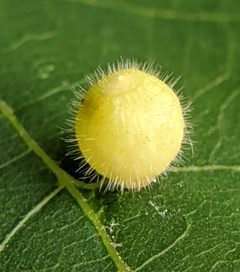
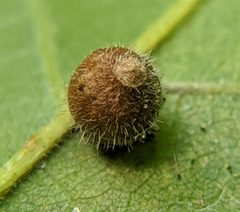
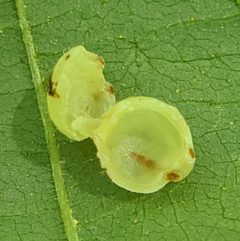
Caryomyia cilidolium is a of gall midge in the Cecidomyiidae, described by Gagné in 2008. It induces distinctive galls on hickory trees (Carya species), specifically forming 'fuzzy ginger jar' shaped structures on leaves. The species is part of a specialized in creating galls on hickory foliage. It has been documented across eastern North America where its trees occur.
Pronunciation
How to pronounce Caryomyia cilidolium: //ˌkæɹiːoʊˈmaɪə ˌsɪlɪˈdoʊliəm//
These audio files are automatically generated. While they are not always 100% accurate, they are a good starting point.
Identification
The fuzzy ginger jar gall is diagnostic; no other Caryomyia produces this exact gall on hickory. The galls are distinct from the smooth, bullet-shaped galls of C. tubicola and the disc-shaped galls of C. caryaecola. flies require microscopic examination of genitalia and antennal structure for definitive identification.
Images
Appearance
are small, delicate flies typical of gall midges, with long, slender legs and bearing bead-like segments (flagellomeres). The body is generally pale to light brown. The is most readily identified by the galls it produces rather than adult : leaf galls are fuzzy, rounded, and ginger jar-shaped, often with a slightly constricted neck, covered in fine hairs, and typically 5–10 mm in diameter.
Habitat
Deciduous forests and woodlands where hickory trees (Carya ) are present, including Carya tomentosa (mockernut hickory) and Carya ovata (shagbark hickory). Occurs in mature forest stands, forest edges, and urban parks with established hickory plantings.
Distribution
Eastern North America, documented from the northeastern United States through the Midwest and south to the Gulf Coast, following the range of its hickory trees.
Seasonality
occurs in spring, coinciding with hickory leaf flush. Gall formation is visible from late spring through summer. Galls persist on fallen leaves through autumn and winter.
Host Associations
- Carya tomentosa - Mockernut hickory; primary
- Carya ovata - Shagbark hickory; documented
Ecological Role
As a gall inducer, the larva stimulates abnormal plant tissue growth that provides shelter and nutrition. The galls may serve as microhabitats for secondary inhabitants including and . The contributes to leaf litter diversity and nutrient cycling when galls fall with leaves.
Human Relevance
Occasional minor aesthetic concern in ornamental hickory plantings; galls do not cause significant tree damage. The is of interest to naturalists and gall researchers for its distinctive gall .
Similar Taxa
- Caryomyia tubicolaAlso forms galls on hickory leaves, but produces smooth, bullet-shaped or tubular galls without the fuzzy covering and ginger jar shape.
- Caryomyia caryaecolaForms disc-shaped or button-like galls on hickory leaf , lacking the rounded, fuzzy, jar-like structure of C. cilidolium.
More Details
Etymology
The specific epithet 'cilidolium' refers to the hairy (ciliate) and jar-like (dolium) appearance of the gall.