
Sylvicola
Harris, 1780
wood gnats, window gnats, window midges, window flies
Species Guides
5- Sylvicola alternatus(wood gnat)
- Sylvicola fenestralis(Window Gnat)
- Sylvicola fuscatus(wood gnat)
- Sylvicola notialis
- Sylvicola punctatus
Sylvicola is a of wood gnats in the Anisopodidae containing over 80 described . The genus is widely distributed across the western Palaearctic, with some species introduced to North America and oceanic islands. are active year-round in temperate regions and are frequently observed indoors near windows, earning them the 'window gnats.' The most thoroughly documented species, S. cinctus, serves as a representative for understanding genus-level traits.
Pronunciation
How to pronounce Sylvicola: //sɪlˈvɪkələ//
These audio files are automatically generated. While they are not always 100% accurate, they are a good starting point.
Identification
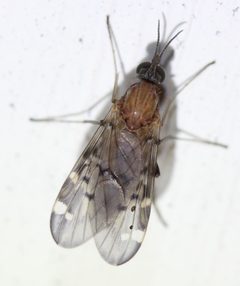
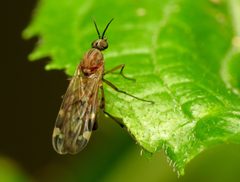
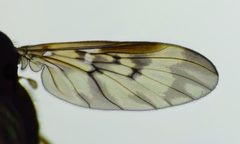
Closely resembles the related S. fenestralis; definitive identification often requires examination of male genitalia. are medium-sized brown flies with long and patterned wings.
Images
Habitat
Widespread across diverse ; larvae develop in rotting or fermenting vegetable matter, with records from sheep carcasses and living plant material. frequently enter buildings and become trapped at windows.
Distribution
Western Palaearctic (North Africa, Europe, Scandinavia, Low Countries, Britain and Ireland); introduced to Azores and St Helena over 100 years ago; more recently established in Israel, Canada, continental United States, and Hawaii.
Seasonality
present year-round in Britain and Ireland; winter activity occurs when temperatures exceed 8°C.
Life Cycle
Can overwinter as either larva or .
Behavior
Males aggregate in small swarms. are strongly attracted to windows and indoor spaces, where they become trapped.
Ecological Role
Larvae contribute to decomposition of rotting and fermenting organic matter; breeding in carrion and plant material suggests potential relevance to medical and veterinary entomology.
Human Relevance
Frequently encountered indoors due to attraction to windows; nuisance presence in buildings has generated referencing this .
Similar Taxa
- Sylvicola fenestralisMorphologically very similar; requires genital examination for reliable separation from S. cinctus and likely other .