
Anisopodinae
Genus Guides
2- Olbiogaster
- Sylvicola(wood gnats)
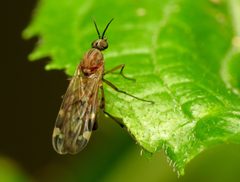
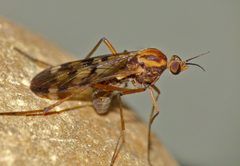
Anisopodinae is a of wood gnats within the Anisopodidae (Diptera). These small flies are characterized by their humpbacked and distinctive wing venation with a reduced anal lobe. The subfamily includes the Anisopus, whose members are associated with decaying wood and fungal . are frequently observed running on vegetation rather than flying.
Pronunciation
How to pronounce Anisopodinae: /ˌænɪˌsɒpəˈdaɪniː/
These audio files are automatically generated. While they are not always 100% accurate, they are a good starting point.
Identification
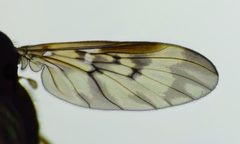
Distinguished from the related Sylviculinae by wing venation: Anisopodinae possess a reduced anal lobe in the wing with A1 not reaching the wing margin. The has a pronounced humpbacked or arched profile. are relatively long with 14-16 flagellomeres. Wing r4+5 and m1 are often or narrowed at the base.
Images
Habitat
Associated with decaying wood, rotting vegetation, and fungal substrates. Larvae develop in moist, decomposing organic matter including dead wood, bracket fungi, and compost. are found in wooded areas, often on tree trunks, foliage, or near larval development sites.
Distribution
Widespread in temperate and tropical regions. Documented from North America, Europe, Asia, and Australasia.
Behavior
are known for their characteristic habit of running rapidly on vegetation, bark, and other surfaces rather than flying. This is a notable trait of the group.
Ecological Role
Larvae function as decomposers in forest , breaking down decaying wood and fungal material. Contributes to nutrient cycling in woodland .
Similar Taxa
- SylviculinaeSister within Anisopodidae; distinguished by complete anal lobe in wing with A1 reaching the margin, and less pronounced thoracic hump.
- Mycetophilidae (fungus gnats)Similar small flies in wooded ; distinguished by different wing venation patterns and lack of the characteristic humpbacked of Anisopodinae.