
Sylvicola fenestralis
(Scopoli, 1763)
Window Gnat
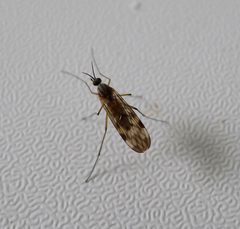
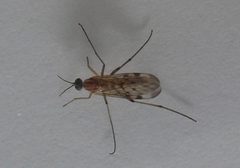
Sylvicola fenestralis, commonly known as the window gnat, is a medium-sized dipteran in the Anisopodidae. measure 6–10 mm in length. The is distributed across the Palearctic region, with records from Scandinavia and other parts of Europe. It is one of approximately 40 species in the Sylvicola.

Pronunciation
How to pronounce Sylvicola fenestralis: //sɪlˈvɪk.ə.lə fɛnˈɛs.trəˌlɪs//
These audio files are automatically generated. While they are not always 100% accurate, they are a good starting point.
Identification
Distinguished from other small dipterans by combination of: medium size (6–10 mm, larger than many related gnats); Anisopodidae characteristics including wing venation pattern with prominent anal lobe; and Palearctic distribution. Separation from congeneric requires examination of detailed morphological characters not provided in available sources.
Images
Appearance
Medium-sized gnat, 6–10 mm in length. As a member of Anisopodidae, likely exhibits the 's characteristic wing venation with a distinct anal lobe and relatively long legs. The specific epithet 'fenestralis' (Latin for 'of windows') may refer to attraction to lighted windows, though this is not explicitly documented in sources.
Distribution
Palearctic region. Documented records include Denmark, Norway, Sweden, and Vermont (USA). The Vermont record may represent introduction or misidentification, as the is primarily Palearctic in distribution.
Similar Taxa
More Details
Taxonomic History
Originally described by Scopoli in 1763, making it one of the earlier described dipteran .
Etymology
The specific epithet 'fenestralis' derives from Latin 'fenestra' (window), likely referencing the ' attraction to windows—common in many small flies that accumulate on window glass, particularly when attracted to interior lighting.