
Systropodini
Genus Guides
2- Dolichomyia
- Systropus(bee flies)
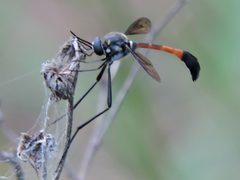
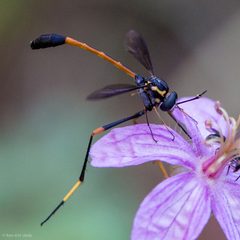
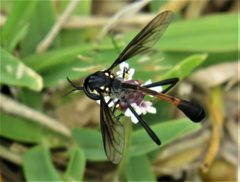
Systropodini is a tribe of bee flies within the Toxophorinae of the Bombyliidae. Members of this tribe are characterized by distinctive morphological features that separate them from other toxophorine groups. The tribe contains multiple distributed across various regions. Bee flies in this group are generally , with larvae developing in the nests of other insects.
Pronunciation
How to pronounce Systropodini: //sɪsˌtrɒpəˈdaɪniː//
These audio files are automatically generated. While they are not always 100% accurate, they are a good starting point.
Identification
Systropodini can be distinguished from other Toxophorinae tribes by features of the wing venation and body structure. The tribe typically exhibits a more robust body form compared to some related groups. Antennal structure and the arrangement of bristles on the body provide additional diagnostic characters. Definitive identification to tribe level requires examination of structural features not visible in field observations.
Images
Habitat
vary by and within the tribe, generally associated with environments where insects are abundant. Many species are found in arid and semi-arid regions, including desert and scrubland . Some members occur in grasslands and open woodland areas. The presence of suitable host nesting sites is a critical habitat requirement.
Distribution
The tribe has a broad distribution with members recorded from multiple continents. Significant representation occurs in the Palearctic, Afrotropical, and Oriental regions. Some extend into the Nearctic and . Distribution patterns reflect the global spread of the Bombyliidae .
Seasonality
activity periods vary by and geographic location. In temperate regions, activity generally occurs during warmer months. Tropical and subtropical species may show extended or year-round activity patterns. Seasonal timing corresponds with the availability of adult food resources and nesting activity.
Life Cycle
details follow the general pattern characteristic of Bombyliidae. are laid near or in nests. First instar larvae are typically planidial, mobile forms that actively seek host larvae or provisions. Subsequent instars are parasitic, feeding on host larvae or stored food within the nest. occurs within the host nest or in the surrounding substrate.
Behavior
are nectar feeders at flowers and exhibit hovering typical of bee flies. Males may establish territories near resources or landmarks. Females demonstrate nest-searching to locate appropriate for oviposition. Larval behavior includes active host-seeking by planidial first instars.
Ecological Role
As , members of Systropodini contribute to of their insects, which are primarily other Hymenoptera. flower visitation provides incidental pollination services. The tribe represents a component of parasitoid diversity in and .
Human Relevance
No direct economic importance has been documented. Indirect relevance includes contributions to of potential pest through activity. may be observed by naturalists and contribute to biodiversity records in citizen science platforms.
Similar Taxa
- ToxophoriniAlso within Toxophorinae; distinguished by differences in wing venation, particularly the arrangement of in the portion of the wing, and antennal structure.
- ExoprosopiniAnother tribe in Toxophorinae; generally differs in body proportions, facial , and details of the structure.
- Other Bombyliidae subfamiliesSystropodini is distinguished from tribes in such as Bombyliinae and Anthracinae by the combination of wing venation patterns, body bristling, and antennal form characteristic of Toxophorinae.
More Details
Taxonomic History
The tribal classification within Toxophorinae has undergone revision, with some previously placed in other tribes reassigned to Systropodini based on morphological analysis. The current circumscription reflects phylogenetic studies incorporating both and larval characters.
Larval Biology
Larval for Systropodini include various ground-nesting bees and , though specific host records are incomplete for many . The planidial first instar represents an for locating dispersed host nests in complex substrates.