
Lepidophora
Westwood, 1835
bee flies
Species Guides
3- Lepidophora lepidocera(Scaly Bee Fly)
- Lepidophora lutea(Hunchbacked Bee Fly)
- Lepidophora vetusta
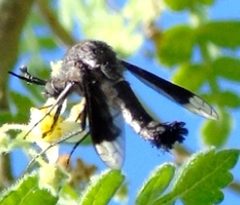
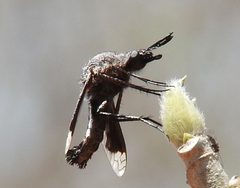
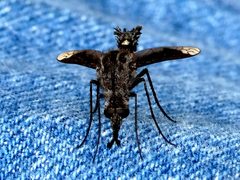
Lepidophora is a of bee flies in the Bombyliidae, comprising eight described restricted to the New World. The genus exhibits a distinctive hunch-backed body shape and includes species with notable mimicry patterns. Larvae are kleptoparasites of solitary nests, usurping provisions rather than parasitizing larvae directly. are commonly observed feeding on nectar from flowers.
Pronunciation
How to pronounce Lepidophora: //ˌlɛpəˈdɒfərə//
These audio files are automatically generated. While they are not always 100% accurate, they are a good starting point.
Identification
in this are distinguished by their hunch-backed body shape, shared between L. lepidocera and L. lutea. L. lepidocera is distinguished from L. lutea by having pale restricted to the 5th abdominal segment versus both 4th and 5th segments in L. lutea. Male and female terminalia provide additional diagnostic characters for species identification.
Images
Distribution
Restricted to the New World. Five occur in the Neotropical region (L. acroleuca, L. culiciformis, L. cuneata, L. secutor, L. trypoxylona); two in the Nearctic region (L. lepidocera, L. lutea); and one species (L. vetusta) occurs in both Nearctic and Neotropical regions. GBIF records include Vermont, USA.
Host Associations
- Sphecidae (Hymenoptera) - of stagesThree recorded as for L. culiciformis; larvae are kleptoparasites on nest provisions
- Vespidae - of stagesLarvae characterized as kleptoparasites on provisions of solitary in this
Life Cycle
Behavior
have been observed taking nectar from flowers, including tall boneset (Eupatorium altissimum). The may exhibit mimicry of robber flies rather than bees, based on body shape and .
Ecological Role
Kleptoparasitic larvae exploit provisions of solitary , potentially affecting wasp reproductive success. may serve as while feeding on nectar.
Similar Taxa
- Laphria (Asilidae)Both exhibit / mimicry; Laphria are true robber flies with predatory , whereas Lepidophora are bee flies with nectar-feeding adults and kleptoparasitic larvae
- Mydas clavatus (Mydidae)Large fly with mimicry and similar 'cool factor' appearance; distinguished by larger size, black coloration with red/orange abdominal marking, and different placement
- Promachus (Asilidae)Large predatory robber flies with similar bold ; distinguished by predatory habit, different body shape, and tiger-striped abdominal pattern in some
More Details
Taxonomic revision
The was comprehensively revised in 2013 (Zootaxa 3682), with all eight redescribed and illustrated, including male and female terminalia. A key to species was provided.
Etymology and pronunciation
The name derives from Greek 'lepidos' () and 'phora' (bearing), referring to the scaled body characteristic of in this genus.
Mimicry hypothesis
Unlike most bee flies that presumably mimic bees, in Lepidophora may actually mimic robber flies based on their distinctive hunch-backed shape and behavioral patterns.
Sources and further reading
- BugGuide
- Wikipedia
- GBIF taxonomy match
- iNaturalist taxon
- NCBI Taxonomy
- Catalogue of Life
- Magnificently Monstrous Muscomorphs | Beetles In The Bush
- Description of the pupae of Lepidophora culiciformis Walker, 1850 (Diptera, Bombyliidae, Ecliminae) and host records
- Factors influencing the burrowing behaviour of adult Leucopholis lepidophora Blanchard (Coleoptera: Scarabaeidae) under laboratory conditions
- Mating Behaviour and Egg Laying Pattern of the Areca Nut White Grub, Leucopholis lepidophora (Coleoptera: Scarabaeidae)
- A Revision of the New World genus <i>Lepidophora</i> Westwood, 1835 (Diptera, Bombyliidae, Ecliminae) with a key to the species
- First Record of Leucopholis lepidophora Blanchard, 1850 (Scarabaeidae; Melolonthinae) from Western Himalayas along with a Checklist of the Genus Leucopholis from India