
Lepidophora vetusta
Walker, 1857
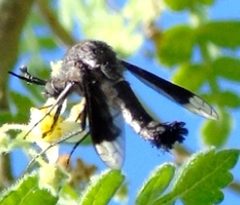
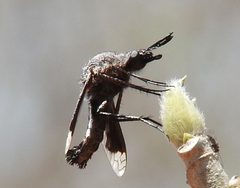
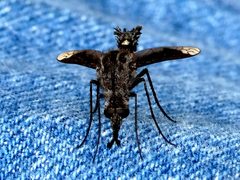
Lepidophora vetusta is a of bee fly in the Bombyliidae. It occurs from Texas south through Mexico to Central America, reaching as far south as Rica. The Lepidophora is characterized by a distinctive hunch-backed body shape. are flower visitors, and larvae are kleptoparasites that usurp the nest provisions of solitary .
Pronunciation
How to pronounce Lepidophora vetusta: //ˌlɛpɪˈdɒfərə vɪˈtʊstə//
These audio files are automatically generated. While they are not always 100% accurate, they are a good starting point.
Images
Distribution
Texas, Mexico, and Central America as far south as Rica.
Life Cycle
Behavior
have been observed visiting flowers for nectar.
Ecological Role
Larvae function as kleptoparasites in nests; may contribute to pollination through flower visitation.
Similar Taxa
- Lepidophora lepidoceraShares the distinctive hunch-backed body shape; distinguished by patterns on abdominal segments (L. lepidocera has pale scales only on the 5th abdominal segment, not on the 4th).
- Lepidophora luteaShares the hunch-backed body shape; occurs more northward and differs in abdominal pattern.
More Details
Mimicry
in the Lepidophora may be mimics of robber flies rather than bees, unlike most bee flies.