
Conophorini
Becker, 1913
bee flies
Genus Guides
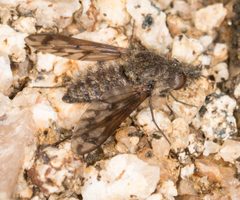
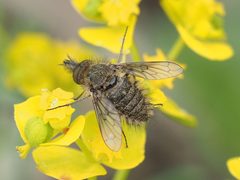
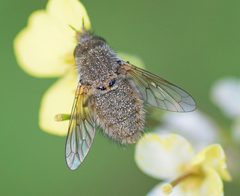
5Conophorini is a tribe of bee flies within the Bombyliidae, established by Becker in 1913. The tribe comprises at least 30 described distributed across four : Aldrichia, Conophorina, Conophorus, and Sparnopolius. Members of this tribe are flies whose larvae develop in the nests of solitary bees and . Conophorini species are found primarily in the Nearctic and Palearctic regions.
Pronunciation
How to pronounce Conophorini: /kəˌnɒfəˈraɪni/
These audio files are automatically generated. While they are not always 100% accurate, they are a good starting point.
Identification
Conophorini can be distinguished from other Bombyliidae tribes by features of wing venation and body proportions, though specific diagnostic characters require examination of . The Conophorus is characterized by a slender body form and relatively long compared to some other bee fly genera. Sparnopolius often show distinctive wing patterns. Definitive identification to tribe level generally requires reference to specialized taxonomic keys for Bombyliidae.
Images
Habitat
are typically found in open, sunny including meadows, grasslands, and forest edges where their bees and nest. Larval habitat is determined by host nesting sites, which include soil burrows, hollow plant stems, and other cavities constructed by solitary Hymenoptera.
Distribution
Documented from the Nearctic and Palearctic zoogeographic regions. The Conophorus has a primarily Holarctic distribution. Aldrichia and Sparnopolius are mainly Nearctic. Specific range limits for the tribe as a whole remain incompletely documented.
Seasonality
activity generally coincides with the periods of their bees and , typically spring through summer in temperate regions. Exact timing varies by and latitude.
Diet
feed on nectar from flowers. Larvae are that consume the provisions and developing larvae of solitary bees and within nests.
Host Associations
- solitary bees (Hymenoptera: Apoidea) - larval development in nests
- solitary wasps (Hymenoptera: Vespoidea) - larval development in nests
Life Cycle
Females deposit near or at the entrances of nests. First instar larvae are planidial, capable of active movement to locate host within the nest. Subsequent instars feed on host provisions and developing larvae. occurs within the host nest.
Behavior
are rapid, agile fliers often observed hovering at flowers. Males establish territories and pursue females in . Females exhibit -seeking , locating nests of appropriate and for oviposition.
Ecological Role
As of solitary bees and , Conophorini function as regulators of these and . Their presence indicates healthy populations of Hymenoptera and contributes to -level parasitoid load on solitary and wasp populations.
Human Relevance
No direct economic importance. Occasionally observed by researchers and naturalists. May incidentally contribute to pollination during nectar feeding.
Similar Taxa
- BombyliiniAnother tribe in Bombyliidae; distinguished by differences in wing venation, particularly the arrangement of in the , and often more robust body form
- LordotiniSimilar bee fly tribe; Conophorini generally lack the pronounced facial modifications found in some Lordotini males
More Details
Taxonomic History
The tribe was established by Becker in 1913. The four constituent show varying degrees of morphological cohesion, with Conophorus being the most -rich and widely distributed.
Research Needs
associations remain incompletely documented for most . details are known primarily from a few well-studied species in the Conophorus.