
Conophorus
Meigen, 1803
bee flies
Species Guides
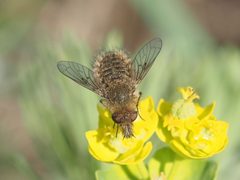
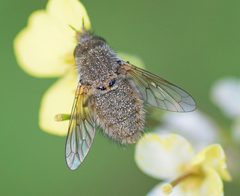
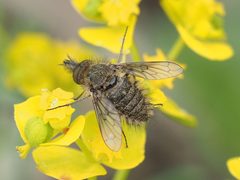
9Conophorus is a of bee flies ( Bombyliidae) containing at least 67 described worldwide, with 16 species recorded from the United States. These dipterans are , with larvae developing in the nests of other insects. The genus is taxonomically established under Meigen, 1803, and is classified within the tribe Conophorini.
Pronunciation
How to pronounce Conophorus: /ˌkoʊ.nəˈfɔːr.əs/
These audio files are automatically generated. While they are not always 100% accurate, they are a good starting point.
Identification
Members of Conophorus can be distinguished from other Bombyliidae by tribal affinities within Conophorini. -level identification requires examination of specific morphological characters described in taxonomic revisions by Priddy (1954, 1958) and Painter (1940).
Images
Distribution
At least 16 described occur in the United States. The has a broader distribution with 67 total species described worldwide.
Life Cycle
As bombyliid flies, Conophorus have larvae. Females deposit near or into nests; larvae then feed on the stages of the host insects.
Ecological Role
Conophorus function as , regulating of their insects through larval development in host nests.
More Details
Taxonomic Note
The name Conophorus has been used in multiple taxonomic contexts. Conophorus C.J.Schoenherr, 1838 is a genus of weevils in Curculionidae (Coleoptera), distinct from the dipteran genus Conophorus Meigen, 1803 discussed here.
Species Diversity
The contains notable with taxonomic revisions documenting such as C. fenestratus, C. rufulus, and C. virescens dating to the late 19th century, and numerous species described by Priddy in the 1950s.