
Systoechus vulgaris
Loew, 1863
grasshopper bee fly
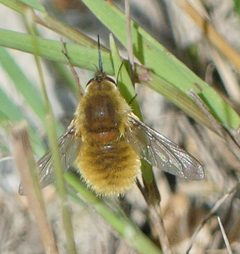
Systoechus vulgaris, commonly known as the bee fly, is a of bee fly in the Bombyliidae. It is found in Canada and across most of the United States. The species is notable for its larvae, which prey upon grasshopper . are active primarily in the fall, distinguishing them from the related Bombylius, which tends to be active in spring.
Pronunciation
How to pronounce Systoechus vulgaris: /sɪsˈtoʊɛkəs vʌlˈɡɛərɪs/
These audio files are automatically generated. While they are not always 100% accurate, they are a good starting point.
Identification
Systoechus vulgaris can be distinguished from the similar Bombylius by the location of the r-m on the wing. Members of Systoechus are generally active as in the fall, whereas Bombylius tend to be active in spring. The " bee fly" refers to its larval association with grasshopper , not to any morphological resemblance to grasshoppers.
Images
Distribution
Canada and across most of the United States.
Seasonality
are active primarily in the fall.
Host Associations
- grasshopper eggs - Larvae are of .
Ecological Role
The larvae function as of , potentially contributing to natural regulation of grasshopper .
Similar Taxa
- BombyliusSimilar appearance and both in tribe Bombyliini; distinguished by wing venation (r-m location) and seasonal activity (Bombylius in spring, Systoechus in fall).
More Details
Taxonomic history
First described by Loew in 1863. The has been consistently placed in the Systoechus within Bombyliidae.
Sources and further reading
- BugGuide
- Wikipedia
- GBIF taxonomy match
- iNaturalist taxon
- Catalogue of Life
- Grasshoppers of Colorado
- Grasshoppers of Colorado
- One-Shot Wednesday: Upside down bee fly | Beetles In The Bush
- Bug Eric: Wasp Wednesday: Western Yellowjacket
- Bees vs wasps: what's the difference? - Buglife Blog - Buglife
- flies | Beetles In The Bush | Page 4