
Poecilanthrax tegminipennis
(Say, 1824)
bee fly
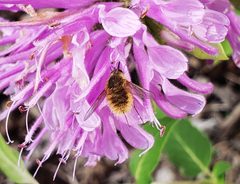
Poecilanthrax tegminipennis is a of bee fly in the Bombyliidae. It is widespread across Canada and the United States. The Poecilanthrax is strictly North American, with the greatest abundance of species and individuals in the Great Basin region. Like other members of the genus, P. tegminipennis is presumed to have larvae that develop as inside caterpillars, though specific records for this species are not documented.
Pronunciation
How to pronounce Poecilanthrax tegminipennis: /ˌpiːsɪˈlænθræks tɛɡˌmɪnɪˈpɛnɪs/
These audio files are automatically generated. While they are not always 100% accurate, they are a good starting point.
Images
Distribution
Widespread in Canada and the United States. GBIF records indicate presence in Vermont, US.
Ecological Role
As a member of the Poecilanthrax, this likely functions as a of lepidopteran larvae, contributing to natural of caterpillar .
More Details
Genus characteristics
Poecilanthrax is a strictly North American containing approximately 35 , with greatest diversity in the Great Basin region. Most species have (one per year), though some agricultural species may become facultatively or multivoltine due to extended seasonal availability of pest caterpillars.
Etymology
The name Poecilanthrax derives from Greek roots: 'poecilo-' meaning 'variegated' or 'spotted', and 'anthrax' meaning 'charcoal' or 'coal', likely referring to the coloration patterns of flies. The epithet 'tegminipennis' refers to the wing covering or tegmina-like appearance of the wings.