
Exoprosopa caliptera
(Say, 1823)
bee fly
Exoprosopa caliptera is a of bee fly in the Bombyliidae, first described by Thomas Say in 1823. It is distributed across western North America, from British Columbia through the western United States to Durango, Mexico. As a member of the Exoprosopini tribe, it shares the general bee fly of a stout, hairy body and a long adapted for nectar feeding.
Pronunciation
How to pronounce Exoprosopa caliptera: //ˌɛksoʊˈpɹoʊsəpə kæˈlɪptərə//
These audio files are automatically generated. While they are not always 100% accurate, they are a good starting point.
Identification
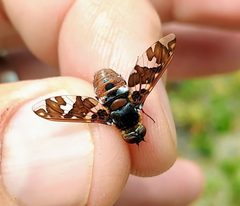
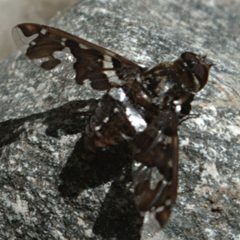
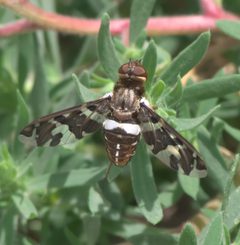
Distinguished from other Exoprosopa by its specific wing patterning, which includes dark markings on a lighter background. The combination of geographic range (western North America) and wing pattern separates it from eastern and southern . Similar to other bee flies in general form, requiring close examination of wing venation and pattern for definitive identification.
Images
Habitat
Open, dry environments including grasslands, sagebrush steppe, and open woodlands. Associated with areas supporting flowering plants that provide nectar resources and suitable conditions for the parasitic larval stage.
Distribution
Western North America: British Columbia, Canada; western United States (including Arkansas and South Dakota); and the Mexican state of Durango.
Seasonality
activity period not well documented; likely active during warm months when flowering plants are available, consistent with patterns observed in related bee fly .
Ecological Role
function as while feeding on nectar. Larvae are , though specific records for this are not documented; related Exoprosopa species parasitize solitary and larvae.
Human Relevance
No direct economic importance. Contributes to pollination of wildflowers in western North American . Occasionally observed by naturalists and photographed by insect enthusiasts.
Similar Taxa
- Other Exoprosopa speciesShare general bee fly and wing patterning; distinguished by specific wing marking details and geographic distribution
- Bombylius speciesSimilar -mimic appearance and long ; Bombylius typically has more uniformly patterned or clear wings and different wing venation
More Details
Nomenclature
The specific epithet 'caliptera' derives from Greek roots meaning 'beautiful wing', directly referencing the ' distinctive wing patterning.