
Proctacanthus nigriventris
Macquart, 1838
Proctacanthus nigriventris is a of robber fly in the Asilidae. Like other members of the Proctacanthus, it is a large, predatory fly. The genus name derives from Greek, referring to the spiny appearance of the . Species in this genus are known for their aggressive predatory and soil-associated .
Pronunciation
How to pronounce Proctacanthus nigriventris: /prɒkˈtækænθəs ˌnaɪɡrɪˈvɛntrɪs/
These audio files are automatically generated. While they are not always 100% accurate, they are a good starting point.
Identification
-level identification within Proctacanthus requires examination of specific coloration patterns and morphological details. For P. nigriventris specifically, the epithet "nigriventris" (black-bellied) suggests dark abdominal coloration distinguishing it from such as P. fulviventris (yellow-bellied) and P. milbertii. Accurate identification typically requires reference to Hine (1911) or other taxonomic treatments of the .
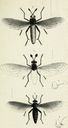
Images
Life Cycle
Based on -level characteristics, females likely oviposit in soil crevices or loose sand. Larvae are presumed to be soil-dwelling, feeding on soil insects, roots, and decaying organic matter before pupating within unlined in the soil. This pattern is documented for other Proctacanthus but has not been specifically confirmed for P. nigriventris.
Ecological Role
As a member of the Asilidae, this likely functions as an aerial of other insects. Related Proctacanthus species are known to prey heavily on grasshoppers and other flying insects, potentially contributing to of herbivorous insects.
Similar Taxa
- Proctacanthus fulviventrisSimilar large size and overall , but distinguished by yellow (fulvous) rather than black abdominal coloration; P. fulviventris is also primarily a Florida near- with limited Georgia distribution
- Proctacanthus milbertiiSimilar preferences and predatory , but occurs more broadly across the U.S. and is active later in the season; specific coloration and leg patterns differ
- Promachus speciesLarge Asilidae with similar predatory habits, but distinguished by different abdominal patterning (often yellow and black tiger striping in common eastern ) and -level morphological characters
More Details
Etymology
The specific epithet "nigriventris" combines Latin "niger" (black) and "venter" (belly/), referring to the dark abdominal coloration characteristic of this .
Taxonomic Note
The Proctacanthus was treated taxonomically by Hine (1911) in his monograph on the robber fly genera Promachus and Proctacanthus. This remains a key reference for identification.