
Proctacanthus longus
(Wiedemann, 1821)
Proctacanthus longus is a of robber fly in the Asilidae. Robber flies of this are large, predatory insects with prominent facial beards. The genus name Proctacanthus translates to "spiny butt," referring to a characteristic morphological feature. Species in this genus are known for their aggressive predatory on other insects.
Pronunciation
How to pronounce Proctacanthus longus: /prəʊkˈtækænθəs ˈlɒŋɡəs/
These audio files are automatically generated. While they are not always 100% accurate, they are a good starting point.
Identification
Distinguished from other Proctacanthus by specific morphological characters; however, precise diagnostic features for P. longus are not documented in the provided sources. The can be recognized by the combination of large size, prominent mystax, and abdominal spines. Separation from such as P. milbertii, P. fulviventris, and P. hinei requires examination of specific coloration patterns on legs and , and geographic distribution.
Images
Appearance
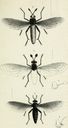
Large robber fly with prominent facial beard (mystax). Typical of the , likely possesses the characteristic abdominal spines that give Proctacanthus its derivation. As with other members of Asilidae, has a single pair of functional wings with the hindwings modified into for stabilization.
Habitat
Specific preferences for P. longus are not documented. Related Proctacanthus have been observed in sandy soils and open habitats where they can access soil for oviposition.
Distribution
Precise geographic range is not specified in available sources. The Proctacanthus occurs across much of the United States.
Life Cycle
Not documented for this . Related Proctacanthus species lay in soil crevices; larvae burrow into soil and feed on soil insects, roots, and decaying plant matter before pupating in unlined within the soil.
Behavior
Not specifically documented. As a robber fly, presumed to be an active aerial of other insects. Related Proctacanthus are known to capture prey in .
Ecological Role
As a member of Asilidae, likely functions as a of other insects, potentially including agricultural pests such as grasshoppers. The Proctacanthus has been documented as significant predators of grasshoppers in some regions.
Similar Taxa
- Proctacanthus milbertiiSimilar large size and prominent beard; distinguished by specific coloration and leg patterns, and by being a late-season with documented preference for prey
- Proctacanthus fulviventrisSimilar size and ; distinguished by bright yellow beard, black with red tibiae, and reddish abdominal ; Florida near- distribution
- Promachus speciesSimilar large predatory robber flies in related ; Promachus often exhibit yellow and black tiger striping on and differ in leg coloration patterns
More Details
Etymology
The name Proctacanthus derives from Greek, translating to "spiny butt" or "spiny ," referring to the characteristic abdominal spines found in members of this genus.