
Namunaria
Reitter, 1882
Species Guides
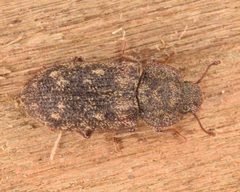
2Namunaria is a of cylindrical bark beetles in the Zopheridae, established by Edmund Reitter in 1882. The genus contains at least two confirmed in North America (N. guttulata and N. pacifica), with additional species reported from Australia, Asia, and other regions. These beetles are characterized by their cylindrical body form, an for living under bark. The genus belongs to the diverse group of bark beetles within Zopheridae, though specific biological details remain poorly documented for most species.
Pronunciation
How to pronounce Namunaria: //næm.jʊˈnɛə.ri.ə//
These audio files are automatically generated. While they are not always 100% accurate, they are a good starting point.
Identification
Cylindrical body shape is the primary diagnostic feature separating Namunaria from flattened bark beetles in such as Curculionidae (Scolytinae). Within Zopheridae, identification to requires examination of body proportions, antennal structure, and male genitalia. -level identification relies on subtle differences in punctation, color pattern, and genitalic characters; N. guttulata is distinguished by spotted , while N. pacifica has different coloration. Dissection and comparison with is typically necessary for confident identification.
Images
Habitat
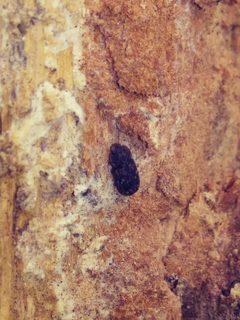
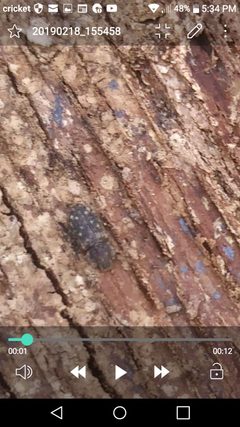
Found under bark of dead or dying trees, where the cylindrical body form allows movement in tight spaces between bark and wood. Specific tree associations are poorly documented but likely include various hardwood and conifer . requirements appear to center on decaying wood with intact bark structure.
Distribution
Confirmed records from North America (western United States and Canada for N. pacifica; broader distribution for N. guttulata). Additional reported from Australia (N. australis, N. communis, N. rufonotata), Bhutan (N. bhutanensis), China (N. chinensis, N. mammillaris), and Japan (N. picta). Global distribution suggests the is more widespread than currently documented, with significant gaps in sampling across Asia and the Pacific.
Ecological Role
Contributes to decomposition of dead wood as part of the saproxylic under bark. Specific ecological functions (fungal transmission, wood processing, -prey relationships) have not been studied. Role in nutrient cycling through dead wood decomposition is inferred from but not quantified.
Human Relevance
No documented economic importance. Not known as a pest of living trees or timber products. Occasionally collected by enthusiasts and researchers studying bark-dwelling fauna. Too poorly known to assess conservation status for any .
Similar Taxa
- Other Zopheridae generaShare cylindrical or subcylindrical body form and bark-dwelling habits; require genitalic examination for separation
- Scolytinae (Curculionidae)Also bark-dwelling but have flattened body form and distinct rostrum; easily separated by body profile and presence of snout
- Colydiinae (Zopheridae)Related with similar habits; often more flattened and with different antennal structure
More Details
Taxonomic uncertainty
count varies between sources: GBIF recognizes 2 North American species, while BioLib lists 7 additional species from Asia and Australia. This discrepancy reflects limited taxonomic revision and potential synonymies. The would benefit from comprehensive phylogenetic study.
Research needs
Basic unknown: no published studies on , development, specificity, or ecological interactions. All and behavioral information is inferred from related or -level characteristics.