
Colydium
Fabricius, 1792
cylindrical bark beetles
Species Guides
4- Colydium glabriculum
- Colydium lineola(Lined Cylindrical Bark Beetle)
- Colydium nigripenne
- Colydium robustum
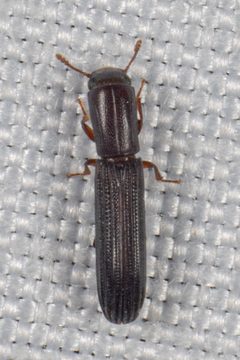
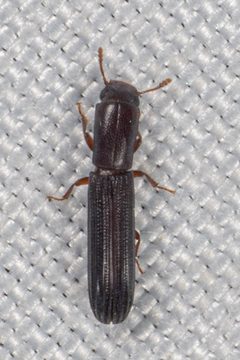
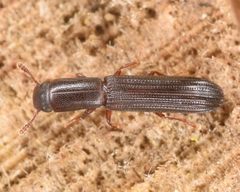
Colydium is a of small, cylindrical bark beetles in the Zopheridae, comprising approximately five described in North America and three in the Western Palearctic. These beetles are morphologically adapted for life under bark, with slender, bodies and costate . At least one species, C. elongatum, has been sequenced at the level, revealing a of 450.16 Mb with 10 chromosomal pseudomolecules. The genus includes both saproxylic species associated with wood decay and stored product pests.
Pronunciation
How to pronounce Colydium: /kəˈlɪdiəm/
These audio files are automatically generated. While they are not always 100% accurate, they are a good starting point.
Identification
Colydium are distinguished by their cylindrical, slender body form and , nearly glabrous dorsum with costate (ridged) . Western Palearctic species can be separated using morphometric characters and genetic analysis; an illustrated key is available for this region. Species-level identification requires examination of subtle morphological differences; cryptic species have been documented.
Images
Habitat
Under bark of dead or dying trees; in galleries of other wood-dwelling insects. At least one (C. castaneum) has been documented in stored product environments.
Distribution
North America (five described : C. glabriculum, C. lineola, C. nigripenne, C. robustum, C. thomasi); Western Palearctic (Europe and North Africa, including C. elongatum, C. filiforme, and C. noblecourti). GBIF records from Denmark, Norway, and Sweden.
Diet
Facultative on or young larvae of insects, or commensal feeding on fungi and decaying organic matter.
Behavior
Morphologically adapted for movement under bark; lives in galleries of other wood-dwelling insects. C. castaneum has been observed in traps baited for Rhyzopertha dominica, with visual cues playing a primary role in trap orientation.
Ecological Role
Saproxylic contributing to wood-decay processes in forest .
Human Relevance
C. castaneum is a stored product pest captured incidentally in traps deployed for monitoring Rhyzopertha dominica in cereal warehouses. C. elongatum sequencing provides genomic resources for the Zopheridae.
Similar Taxa
- Colydium elongatumType for sequencing; distinguished by specific morphometric and genetic characters from other Western Palearctic species
- Colydium filiformeCo-occurs with C. elongatum in the western Palearctic; separated by morphological and genetic analysis
- Colydium noblecourtiRecently described European ; cryptic and requiring genetic/morphometric analysis for separation from
Sources and further reading
- BugGuide
- Wikipedia
- GBIF taxonomy match
- iNaturalist taxon
- NCBI Taxonomy
- Catalogue of Life
- The genus Colydium Fabricius in Europe (Coleoptera, Zopheridae, Colydiinae) with description of a new species, Colydium noblecourti sp. nov.
- Capture of Rhyzopertha dominica (F.) (Col., Bostrichidae) with Dominicalure multifunnel traps and considerations on trapping of non target species: Sitophylus oryzae L., Cryptolestes ferrugineus (Stephens) and Colydium castaneum (Herbst)
- The genome sequence of the cylindrical bark beetle, Colydium elongatum (Fabricius, 1787) (Coleoptera: Zopheridae).