
Edrotes
J.L. LeConte, 1851
hairy robot beetle, desert hairy robot beetle
Species Guides
4- Edrotes arens
- Edrotes leechi
- Edrotes rotundus
- Edrotes ventricosus(hairy robot beetle)
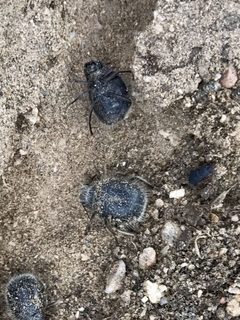
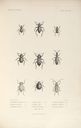
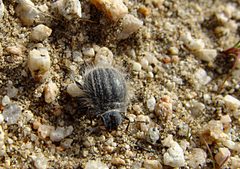
Edrotes is a of darkling beetles (Tenebrionidae) in the tribe Edrotini, characterized by small, rounded body forms adapted to arid environments. The genus includes such as Edrotes ventricosus, which exhibits a distinctive fuzzy appearance due to setae. Members inhabit desert regions of southwestern North America and display seasonal activity patterns influenced by temperature.
Pronunciation
How to pronounce Edrotes: /ˈɛdɹoʊtiːz/
These audio files are automatically generated. While they are not always 100% accurate, they are a good starting point.
Identification
Distinguished from other darkling beetles by the combination of small size, highly rounded body contour, and dense . The 'robot-like' appearance—compact rounded form with visible segmentation—separates it from more elongate or flattened Pimeliinae. Similar in Edrotini lack the same degree of body rotundity and hair .
Images
Habitat
Desert environments, including sandy areas and desert scrub. One has been observed in sandy roadside adjacent to riparian corridors.
Distribution
Southwestern North America: southwestern United States (California, Nevada, Arizona) and northwestern Mexico (Baja California, Sonora). A record from Colorado suggests possible range extension or vagrant occurrence.
Seasonality
Active from early spring through late winter. In southern portions of range, active year-round. Adults may emerge during winter on warmer days.
Diet
Herbivorous, feeding on various native and introduced plants including saltgrass (Distichlis spicata), cheatgrass (Bromus tectorum), saltwort (Salsola spp.), and wild onion (Allium spp.).
Behavior
may emerge to feed on warmer winter days. Activity patterns vary geographically, with year-round activity in southern range and more seasonal activity in northern areas.
Ecological Role
Herbivore in desert ; contributes to plant material processing and nutrient cycling in arid environments.
Human Relevance
Kept as pets due to ease of maintenance and appealing appearance—small rounded body and fuzzy texture perceived as 'cute'.
Similar Taxa
- Other Edrotini generaShare Pimeliinae and tribe Edrotini but differ in body shape (less rounded) and hair
- Other TenebrionidaeDistinguished by compact rounded form and conspicuous
More Details
Taxonomic placement
Placed in tribe Edrotini, Pimeliinae; this tribe contains desert-adapted darkling beetles primarily distributed in North American arid regions.