
Stenomorpha
Solier, 1836
Species Guides
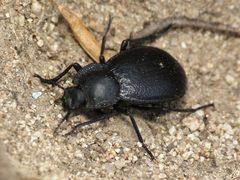
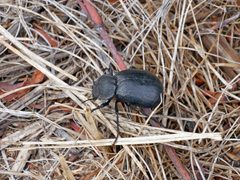
36Stenomorpha is a large of darkling beetles ( Tenebrionidae) comprising more than 160 described and . The genus was established by Solier in 1836 and belongs to the tribe Asidini within Pimeliinae. Species-level has been historically neglected, with no modern revision for nearly 175 years until recent work by Keller (2008) and others. The genus exhibits notable diversity in the southwestern United States and Mexico, with some species occurring in specialized including California vernal pools and the Cuatrociénegas Protected Area in Coahuila, Mexico.

Pronunciation
How to pronounce Stenomorpha: //ˌstɛ.nəˈmɔːr.fə//
These audio files are automatically generated. While they are not always 100% accurate, they are a good starting point.
Identification
Stenomorpha are typically recognized as small to medium-sized darkling beetles within the tribe Asidini. The historically contained 88 species but recent taxonomic revision has recognized 51 valid species with seven newly established subgenera. Species identification requires careful examination of morphological characters; Keller (2008) provides a modern taxonomic framework for distinguishing species within the genus. Some species are flightless and exhibit restricted distributions, particularly those in the southern Transverse Range and Sierra Transvolcanica of Mexico. The furcata species group, comprising S. roosevelti, S. furcata, S. wickhami, and S. granicollis, can be distinguished using the key provided by Smith, Miller, and Wheeler (2011).
Images
Habitat
vary by . Stenomorpha costata occurs in Mexico and is flightless. Certain species have been documented from California vernal pools, though they are not formally listed as vernal pool species. The furcata species group is known from the Cuatrociénegas Protected Area in Coahuila, Mexico—a unique desert wetland system. Field observations indicate some species occupy rocky shortgrass prairie habitats, as evidenced by Stenomorpha opaca found crawling on rocks in Cimarron County, Oklahoma.
Distribution
The Stenomorpha is distributed across the Nearctic region, with primary diversity in the southwestern United States and Mexico. Documented localities include: California (including vernal pool ); Coahuila, Mexico (Cuatrociénegas Protected Area); Cimarron County, Oklahoma; and the Sierra Transvolcanica and southern Transverse Range in Mexico. The genus has been recorded from Mills Rim Campground in Harding County, New Mexico.
Human Relevance
Stenomorpha has been the subject of recent taxonomic research, including doctoral dissertation work by Fran Keller at UC Davis. The serves as a model group for studying and speciation in arid-land beetles, particularly for understanding the evolution of flightlessness and restricted distributions in montane and desert . Certain ' occurrence in California vernal pools has potential conservation significance, though they are not currently listed as protected species.
Sources and further reading
- BugGuide
- Wikipedia
- GBIF taxonomy match
- iNaturalist taxon
- NCBI Taxonomy
- Catalogue of Life
- Fran Keller: Entomologist, Teacher, Artist, Author | Bug Squad
- Teacher Extraordinaire | Bug Squad
- Psychidae | Beetles In The Bush
- Cantharidae | Beetles In The Bush
- Zygophyllaceae | Beetles In The Bush
- A new species of Stenomorpha Solier (Coleoptera: Tenebrionidae: Pimeliinae: Asidini) from Cuatrociénegas, Mexico with a key to the furcata species group