Philolithus elatus
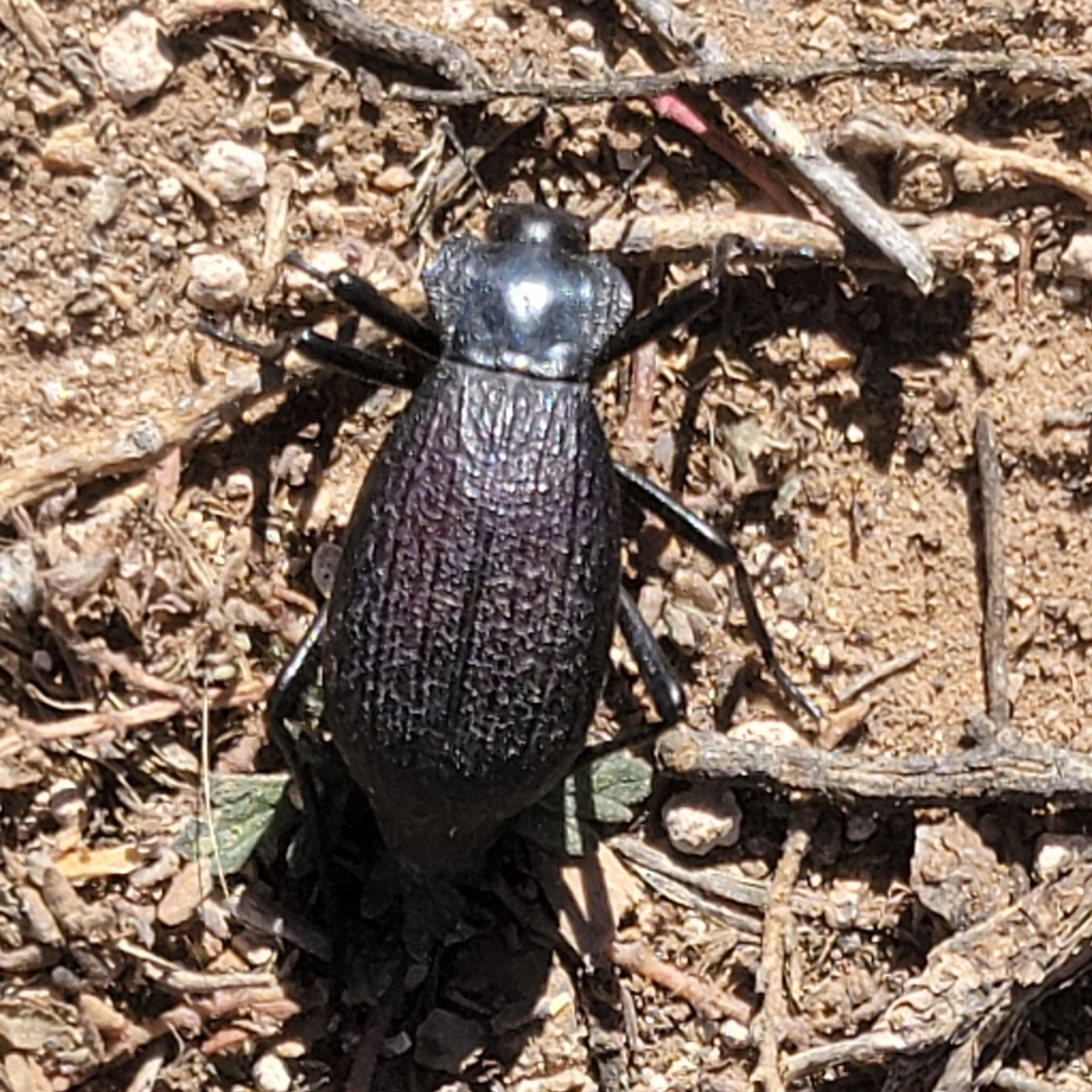
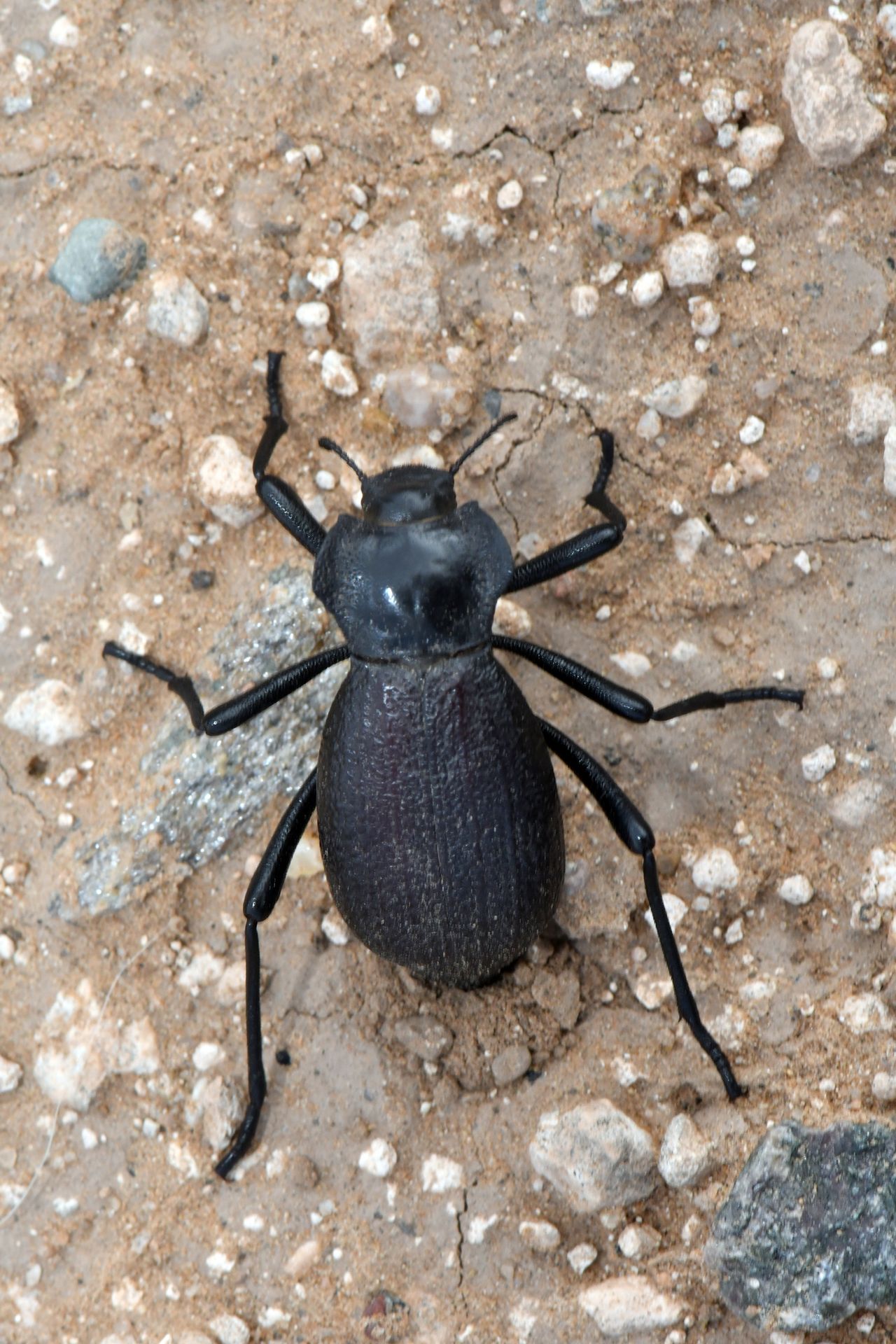
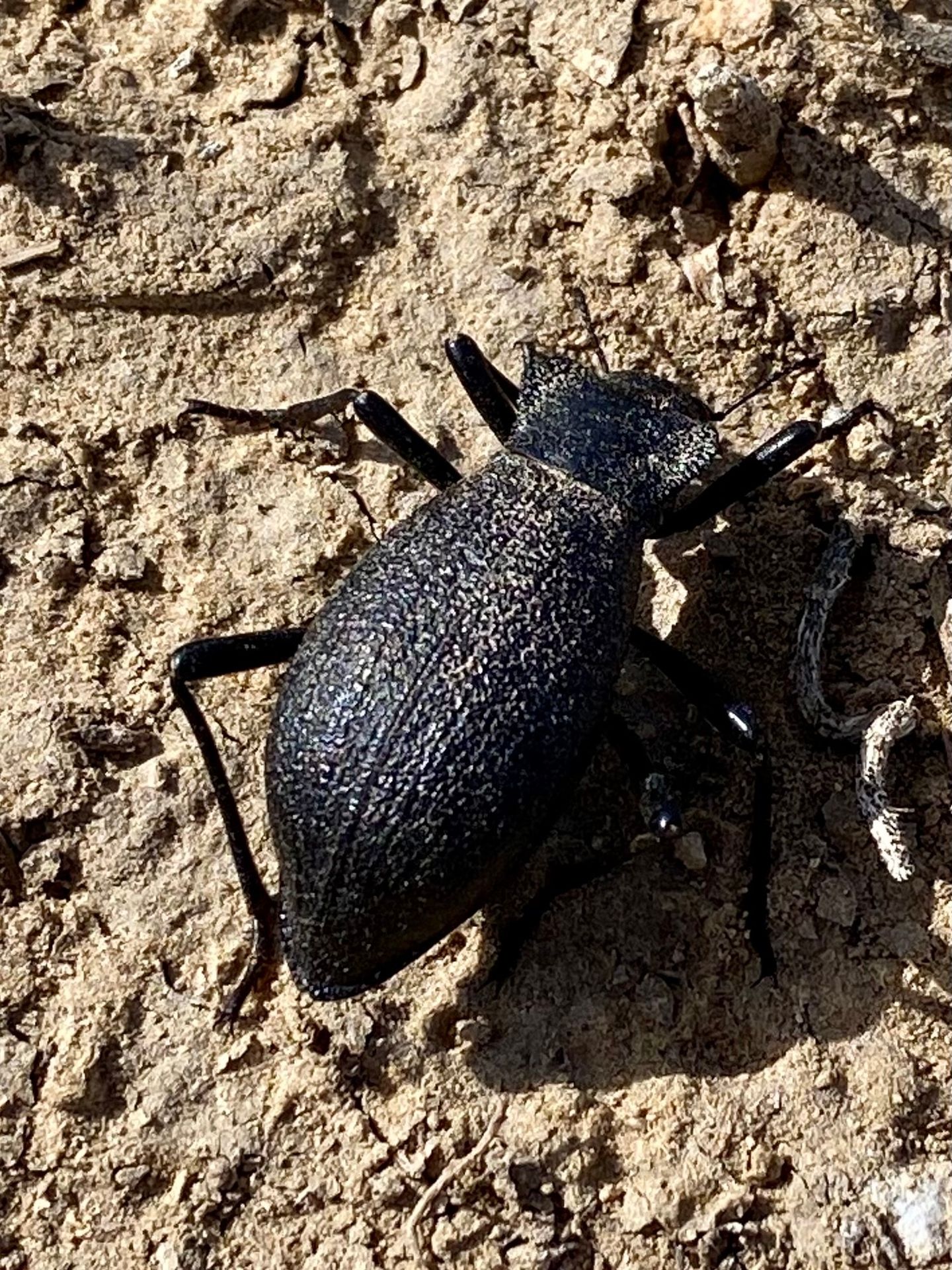
Philolithus elatus is a relatively large darkling beetle (Tenebrionidae) native to western North America. measure 21–35 mm and are shiny black with distinctive pronotal : the surface is smooth and convex centrally, while the lateral margins are expanded, flexed upward, and punctate. The exhibits four recognized distinguished primarily by elytral carinae development and pronotal margin angulation. It is a notable example of , resembling the chemically-defended Eleodes obscura in both appearance and defensive posture despite lacking defensive glands.
Pronunciation
How to pronounce Philolithus elatus: /fɪˈlɒlɪθəs ɛˈleɪtəs/
These audio files are automatically generated. While they are not always 100% accurate, they are a good starting point.
Identification
Distinguished from similar large black tenebrionids by the combination of: (1) smooth, convex central pronotal surface with expanded, upward-flexed, punctate lateral margins; (2) distinct constriction between prothorax and ; and (3) body length of 21–35 mm. identification requires examination of elytral carinae and pronotal margin reflexion: P. e. compar and P. e. difformis have well-defined elytral carinae, while P. e. elatus and P. e. infernus have poorly defined or absent carinae with rough elytral surfaces. Pronotal margins are strongly angled and reflexed in P. e. difformis and P. e. elatus, but less so in P. e. compar and P. e. infernus. Resembles Eleodes obscura but lacks defensive glands; may be distinguished by pronotal structure and, when visible, elytral patterning.
Images
Habitat
Shrub savannas, pinyon-juniper savannas, shrub steppes, grassy steppes, grasslands, sagebrush steppe, and desert shrub areas. Each occupies a subset of the total range with modest overlap between them.
Distribution
Western North America. Specific distribution varies by .
Seasonality
emerge in late summer and early fall and survive for approximately one month.
Life Cycle
lay on mounds of Pogonomyrmex ants. Larval has not been directly studied, but based on the Philolithus densicollis, larvae are expected to live underground for multiple years.
Behavior
Has been observed to adopt a "headstanding" defensive posture, mimicking the characteristic of Eleodes obscura. This posture, combined with physical resemblance, constitutes of the chemically-defended model .
Ecological Role
Expected to function as a contributing to nutrient cycling, based on the of other tenebrionid beetles. The large, energy-rich serve as a significant food source for when present.
Similar Taxa
- Eleodes obscuraPhysical resemblance and behavioral mimicry; distinguished by Eleodes having defensive glands producing quinones, different pronotal structure, and often different elytral sculpturing. Each of P. elatus closely resembles a sympatric subspecies of E. obscura.
- Philolithus aegerCongeneric sharing large size and darkling beetle ; distinguished by specific pronotal and elytral characteristics detailed in identification.