
Statira nigromaculata
Champion, 1889
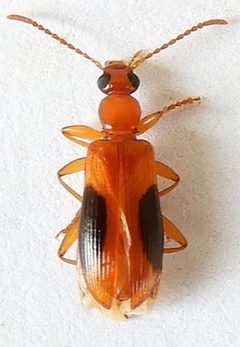
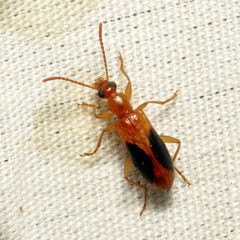
Statira nigromaculata is a of darkling beetle in the Tenebrionidae, originally described by Champion in 1889. It belongs to the Lagriinae, a group formerly treated as the separate family Lagriidae. The Statira is characterized by elongated bodies and relatively long compared to other darkling beetles. This species is part of a diverse tropical fauna with limited published ecological information.
Pronunciation
How to pronounce Statira nigromaculata: /stæˈtɪrə ˌnɪɡroʊˌmækjʊˈleɪtə/
These audio files are automatically generated. While they are not always 100% accurate, they are a good starting point.
Identification
Distinguished from ground beetles (Carabidae) by bead-like rather than filamentous segments and concealed rather than exposed . Within Tenebrionidae, Lagriinae members like Statira have more elongate bodies and longer antennae than the compact, slow-moving Eleodes-type darkling beetles. The specific epithet 'nigromaculata' refers to dark spotting, but confirmation requires examination of or original description.
Images
Distribution
Recorded from Mexico (MX). GBIF distribution records indicate presence in this country, though specific localities are not detailed in available sources.
Similar Taxa
- Statira basalis in same , sharing elongated body form and long-jointed characteristic of Lagriinae; would require examination of spotting pattern and other subtle characters for separation.
- Lagria speciesOther members of Lagriinae with similar overall ; Lagria is the type of the subfamily and shares the elongated habitus.
- Eleodes speciesClassic darkling beetles in Tenebrioninae that differ in more compact, robust body form and often exhibit distinctive -standing defensive not characteristic of Lagriinae.
More Details
Taxonomic History
Statira nigromaculata was described by George Champion in 1889. The Statira belongs to Lagriinae, which was formerly treated as the separate Lagriidae before being subsumed into Tenebrionidae. This taxonomic reclassification explains why some older literature may refer to 'long-jointed beetles' as a distinct family.
Subfamily Characteristics
Lagriinae (long-jointed beetles) differ from other Tenebrionidae in their more elongate, parallel-sided bodies and relatively long, slender . They lack the robust, compact form and seen in many desert-dwelling Tenebrioninae.