
Embaphion planum
Horn, 1870
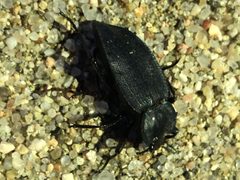
Embaphion planum is a darkling beetle in the Tenebrionidae, first described by Horn in 1870. The Embaphion is characterized by distinctly explanate (flanged or flattened) that give these beetles a broad, flattened appearance. Species in this genus are primarily and associated with arid and semi-arid . E. planum is one of several Embaphion species found in North American desert and grassland .
Pronunciation
How to pronounce Embaphion planum: //ɛmˈbæfiˌɒn ˈpleɪnəm//
These audio files are automatically generated. While they are not always 100% accurate, they are a good starting point.
Identification
Distinguished from ground beetles (Carabidae) by bead-like (not thread-like) and concealed (not exposed) . Distinguished from other darkling beetles by the distinctly explanate, flanged that are characteristic of the Embaphion. Separated from the congeneric E. muricatum by generally smoother elytral surface (E. muricatum has more pronounced or roughness). The broad, flattened body profile separates it from Eleodes and most other tenebrionid genera.
Images
Habitat
Arid and semi-arid environments including sand dunes, dry grasslands, and desert scrub. Associated with sandy or loose soil substrates where activity occurs on the surface.
Distribution
North American grassland and desert regions, with records from the southwestern United States including New Mexico and surrounding areas.
Seasonality
Active during warmer months; have been observed in September. activity pattern typical of the .
Behavior
, crawling on ground surface at night. Moves slowly rather than running rapidly. Like other Embaphion , likely seeks shelter under vegetation or in soil during daylight hours.
Ecological Role
Human Relevance
Of interest to entomologists and collectors due to distinctive ; no known economic importance.
Similar Taxa
- Embaphion muricatumAlso has explanate but differs in having more prominently tuberculate or rough elytral surface; both occur in similar and have been collected together at lights
- Eleodes spp.Similar darkling beetle habit but lacks explanate , has more cylindrical body form, and exhibits characteristic -standing defensive
- Philolithus aegerAnother large, slow-moving, tank-like tenebrionid but lacks the distinctly flanged, explanate of Embaphion
More Details
Taxonomic placement
Embaphion was formerly placed in the tribe Epitragini but has undergone taxonomic revision; the remains in Tenebrionidae but precise tribal placement may vary by source.
Collection method
Like other tenebrionids, E. planum is readily collected at ultraviolet lights and mercury-vapor lights at night in appropriate .