
Pytho
Latreille, 1797
dead log beetles, dead log bark beetles
Species Guides
3- Pytho americanus(dead log beetle)
- Pytho niger(Black Pythid Beetle)
- Pytho seidlitzi(dead log beetle)
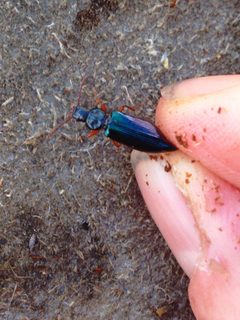
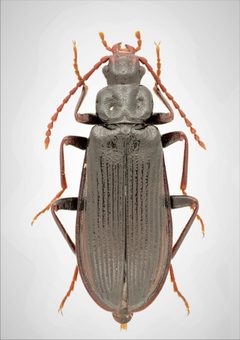
Pytho is a small of saproxylic beetles in the Pythidae, commonly known as dead log beetles or dead log bark beetles. The genus comprises approximately nine to ten described distributed across the Holarctic region, recognized as typically . Species inhabit the cambial layer of dead trees, particularly conifers, where larvae feed on partially decomposed wood and bark. Several species have disjunct distributions spanning North America, Europe, and Japan, reflecting complex historical biogeographic patterns involving vicariance and across Beringia. Some species, such as P. abieticola, are considered relicts of primeval forests and are in decline across much of Central Europe.
Pronunciation
How to pronounce Pytho: /ˈpiːθəʊ/
These audio files are automatically generated. While they are not always 100% accurate, they are a good starting point.
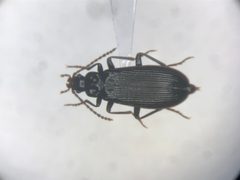
Images
Habitat
The cambial layer of dead trees, particularly dead conifers including pine (Pinus spp.). are strongly associated with old-growth forest .
Distribution
Holarctic distribution, primarily . Palearctic records include Europe (including Switzerland, Lithuania, Moldova, Serbia, Greece), Russia, Fennoscandia, and Japan. Nearctic records include North America. Specific documented locations: Switzerland (Jura mountains, Swiss National Park), Lithuania (Alytus, Ignalina, Kaišiadorys District Municipalities), Moldova (Chișinău), Serbia (Voždovac), Greece (Rhodope Mountain range). Pytho depressus is the most widespread with records in more than 30 countries.
Diet
Larvae feed on partially decomposed wood and bark in the cambial layer of dead trees.
Life Cycle
Development includes larval and pupal stages. Larvae are dorsoventrally depressed and orthosomatic, adapted for activity in the cambial layer.
Ecological Role
Saproxylic beetles that contribute to wood decomposition and nutrient cycling in dead wood .
Human Relevance
Some of conservation concern due to dependence on old-growth forest . Pytho abieticola is considered a relict of primeval forests and has declined across much of Central Europe.
Similar Taxa
- Cucujus clavipesLarvae share dorsoventrally depressed body form and cambial layer , but Cucujus clavipes occurs under bark of decaying hardwood logs rather than conifers.
- Dendroides canadensisLarvae are morphologically similar with depressed, orthosomatic bodies adapted for cambial layer activity, but Dendroides canadensis inhabits decaying hardwood logs rather than conifers.
Misconceptions
Historical literature describes in this as predatory on other insects in the cambial layer, but original studies demonstrating this feeding have not been identified. Mandibular structure and feeding habits research indicates the primary diet is partially decomposed wood and bark rather than .
More Details
Taxonomic history
The has undergone taxonomic revision, with synonymies including P. fallax [= P. niger], P. americanus [= P. planus], and transfer of P. deplanatus to synonymy under P. planus. Four monophyletic -groups are recognized: P. seidlitzi group, P. kolwensis group, P. niger group, and P. depressus group.
Biogeography
Phylogenetic and distributional evidence suggests the ancestor of Pythidae may have been associated with Coniferae as early as the Jurassic. Two -groups show similar disjunctions across North America, Europe, and Japan, likely resulting from vicariance with the opening of the North Atlantic in the Middle Cretaceous. The P. depressus group, now circumboreal, probably spread across Beringia during the middle to late Tertiary when coniferous forest covered the land bridge.
Conservation status
Pytho kolwensis and P. abieticola are of particular conservation concern due to specialized old-growth forest requirements. Swiss of P. abieticola represent the westernmost distribution and are considered relict populations.
Sources and further reading
- BugGuide
- Wikipedia
- GBIF taxonomy match
- iNaturalist taxon
- NCBI Taxonomy
- Catalogue of Life
- Comprehensive review of Burmese python science released
- Snake trade in Indonesia is not sustainable enough — but it could be
- Gone unnoticed: The first record of Pytho depressus in Greece
- Habitat requirements and conservation of Pytho kolwensis, a beetle species of old-growth boreal forest
- Figure 4 from: Jaskuła R, Ćoso D, Tamutis V, Ferenca R (2024) Updated distributional checklist of the genus Pytho Latreille, 1796 of the Palearctic realm with the first records of P. abieticola J. R. Sahlberg, 1875 from Lithuania and the family Pythidae (Coleoptera) from Moldova and Serbia. Biodiversity Data Journal 12: e115422. https://doi.org/10.3897/BDJ.12.e115422
- Figure 5 from: Jaskuła R, Ćoso D, Tamutis V, Ferenca R (2024) Updated distributional checklist of the genus Pytho Latreille, 1796 of the Palearctic realm with the first records of P. abieticola J. R. Sahlberg, 1875 from Lithuania and the family Pythidae (Coleoptera) from Moldova and Serbia. Biodiversity Data Journal 12: e115422. https://doi.org/10.3897/BDJ.12.e115422
- Figure 2 from: Jaskuła R, Ćoso D, Tamutis V, Ferenca R (2024) Updated distributional checklist of the genus Pytho Latreille, 1796 of the Palearctic realm with the first records of P. abieticola J. R. Sahlberg, 1875 from Lithuania and the family Pythidae (Coleoptera) from Moldova and Serbia. Biodiversity Data Journal 12: e115422. https://doi.org/10.3897/BDJ.12.e115422
- On the occurrence of relict populations of Pytho abieticola J. R. Sahlberg, 1875 in Switzerland (Coleoptera, Pythidae)
- Figure 1 from: Jaskuła R, Ćoso D, Tamutis V, Ferenca R (2024) Updated distributional checklist of the genus Pytho Latreille, 1796 of the Palearctic realm with the first records of P. abieticola J. R. Sahlberg, 1875 from Lithuania and the family Pythidae (Coleoptera) from Moldova and Serbia. Biodiversity Data Journal 12: e115422. https://doi.org/10.3897/BDJ.12.e115422
- Additional North American Distribution Records for the GenusPythoLatreille (Coleoptera: Tenebrionoidea: Pythidae)
- NATURAL HISTORY, CLASSIFICATION, RECONSTRUCTED PHYLOGENY, AND GEOGRAPHIC HISTORY OF PYTHO LATREILLE (COLEOPTERA: HETEROMERA: PYTHIDAE)
- Desenvolvimento de um programa computacional para análise de vigas Euler-Bernoulli utilizando a linguagem Pytho
- MANDIBULAR STRUCTURE AND FEEDING HABITS OF THREE MORPHOLOGICALLY SIMILAR COLEOPTEROUS LARVAE: CUCUJUS CLAVIPES (CUCUJIDAE), DENDROIDES CANADENSIS (PYROCHROIDAE), AND PYTHO DEPRESSUS (SALPINGIDAE)
- Updated distributional checklist of the genus Pytho Latreille, 1796 of the Palearctic realm with the first records of P. abieticola J. R. Sahlberg, 1875 from Lithuania and the family Pythidae (Coleoptera) from Moldova and Serbia
- Figure 3 from: Jaskuła R, Ćoso D, Tamutis V, Ferenca R (2024) Updated distributional checklist of the genus Pytho Latreille, 1796 of the Palearctic realm with the first records of P. abieticola J. R. Sahlberg, 1875 from Lithuania and the family Pythidae (Coleoptera) from Moldova and Serbia. Biodiversity Data Journal 12: e115422. https://doi.org/10.3897/BDJ.12.e115422