Litargus tetraspilotus
LeConte, 1856
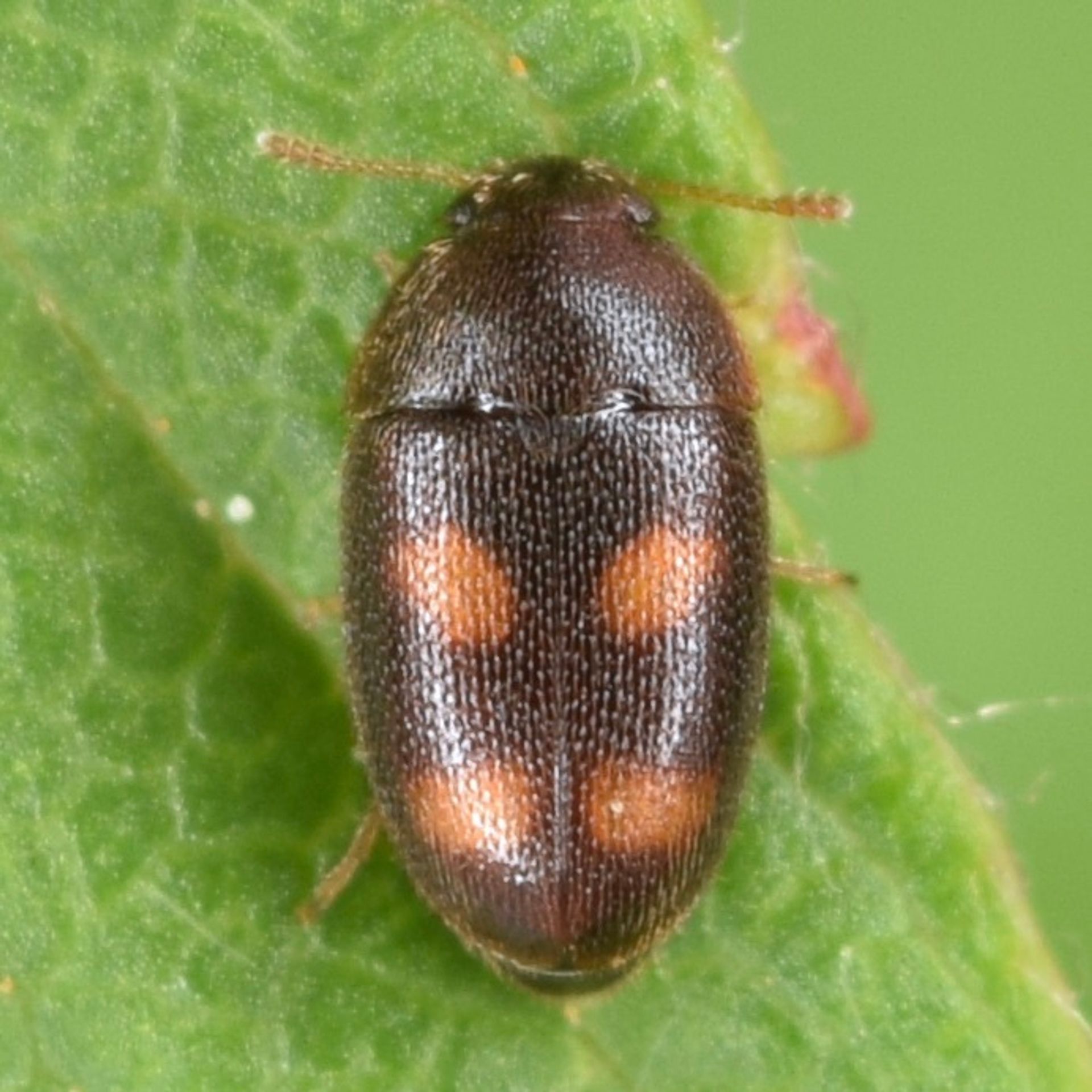
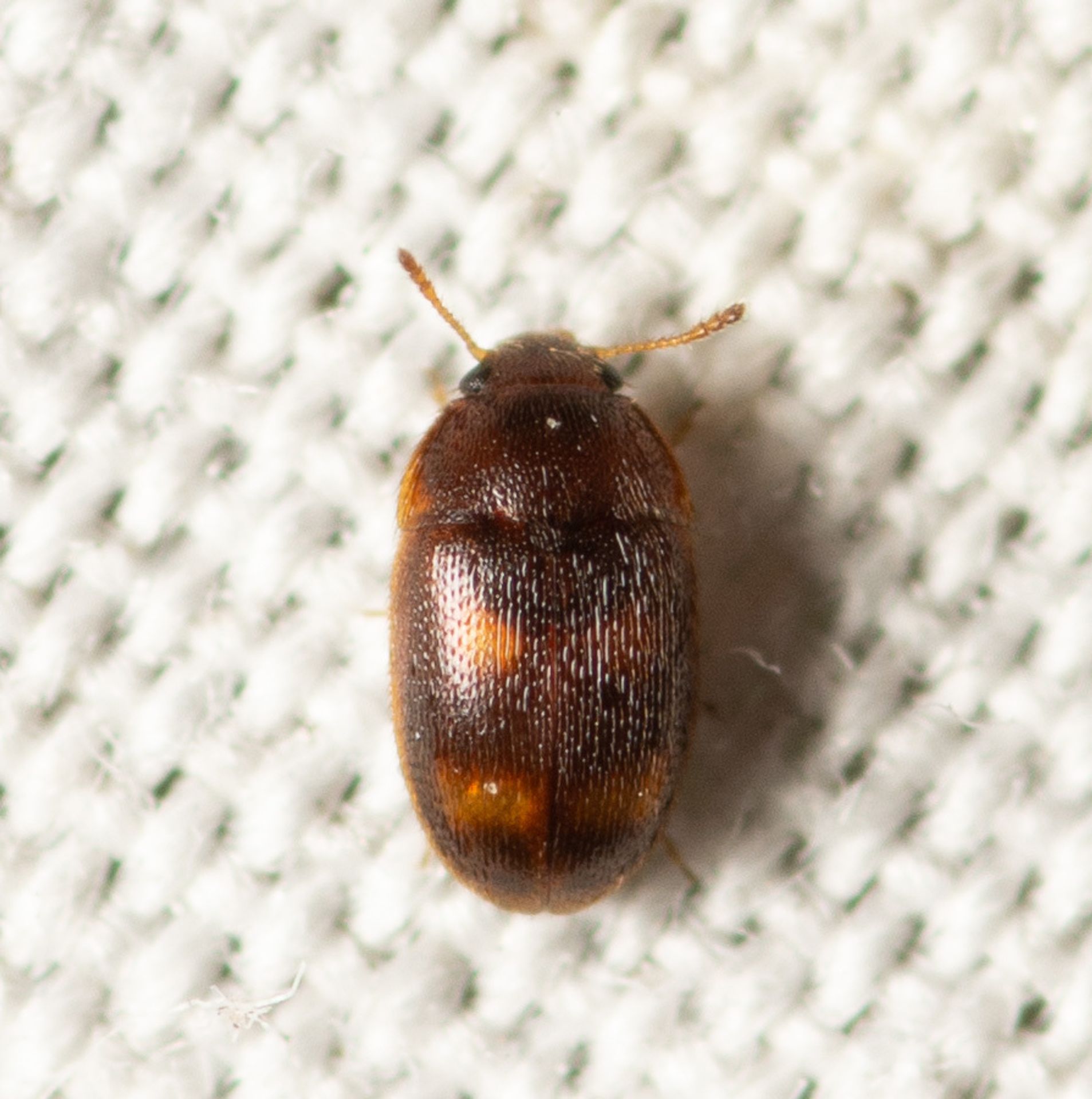
Four-spotted Hairy Fungus Beetle
Litargus tetraspilotus is a small hairy fungus beetle in the Mycetophagidae, first described from North America in 1856 and more recently recorded in Brazil. It feeds on powdery mildew fungi (Oidium sp.) and has been studied as a potential agent for fungal on fruit trees. show seasonal variation tied to humidity and rainfall patterns.
Pronunciation
How to pronounce Litargus tetraspilotus: //lɪˈtɑːrɡəs tɛtrəˈspaɪlətəs//
These audio files are automatically generated. While they are not always 100% accurate, they are a good starting point.
Identification
Distinguished from other Litargus by the four-spotted pattern referenced in its species name. In Brazil, it represents one of only three recorded Mycetophagidae species. Identification to species level requires examination of genitalia and other subtle morphological characters; the Brazilian study provided complementary descriptions based on new characters not previously used.
Images
Habitat
Fruit tree orchards, particularly citrus plantings (Citrus nobilis, C. sinensis, C. limon, C. reticulata) and other fruit trees including Diospyros kaki, Prunus persica, and Prunus persica var. nucipersica. Associated with fungal growth on leaves, specifically powdery mildew .
Distribution
Native to North America (Canada, United States); expanded range includes Mexico, Guatemala, Nicaragua, Panama, Argentina, and Brazil (first recorded in Ponta Grossa, Paraná state). GBIF records indicate presence in Manitoba, Canada and São Paulo state, Brazil.
Seasonality
In Paraná, Brazil, highest abundance occurs in spring and lowest in autumn. Activity correlated with rainfall and relative humidity, with significant variation between years.
Diet
Mycophagous; feeds on Oidium sp. (Ascomycota, Erysiphaceae), a powdery mildew fungus growing on fruit tree leaves.
Host Associations
- Oidium sp. - food sourcePowdery mildew fungus (Erysiphaceae) on Citrus limon and other citrus
- Citrus nobilis - /food substrate plant for Oidium sp. food source
- Citrus sinensis - /food substrate plant for Oidium sp. food source
- Citrus limon - /food substrate plant for Oidium sp. food source
- Citrus reticulata - /food substrate plant for Oidium sp. food source
- Diospyros kaki - /food substrate plant for Oidium sp. food source
- Prunus persica - /food substrate plant for Oidium sp. food source
- Prunus persica var. nucipersica - /food substrate plant for Oidium sp. food source
Life Cycle
Laboratory rearing successful at 22.05±1.44°C and 55.68±10.70% relative humidity. laid on moistened filter paper with fungus-infected leaf pieces; larvae and pupae develop on same substrate. Specific duration periods for developmental stages were studied but values not provided in available excerpt.
Behavior
abundance shows significant positive correlation with rainfall and relative humidity. Seasonal fluctuation observed with spring peaks and autumn lows. or cryptic habits typical of inferred but not explicitly documented.
Ecological Role
Mycophagous feeder that consumes powdery mildew fungi on fruit trees. Potential role as agent for fungal plant , though this application has not been formally developed.
Human Relevance
Potential biocontrol agent for powdery mildew on citrus and other fruit crops. Presence in orchards indicates natural fungal control occurring, though deliberate use in pest management has not been reported.
Similar Taxa
- Other Litargus speciesRequire examination of genitalia and subtle morphological characters for separation; the four-spotted pattern may be diagnostic but confirmation needed
- Other MycetophagidaeShare hairy appearance and mycophagous habits; identification to and requires knowledge and microscopic examination
More Details
Research significance
This was the subject of the first detailed bioecological study of any Mycetophagidae species in Brazil, highlighting how poorly studied this is in the Neotropics. The 565 specimens collected over two years represent one of the most intensive studies of this family.
Laboratory rearing methods
Successful rearing used simple substrate of moistened filter paper with fungus-infected leaf pieces, suggesting potential for mass rearing if biocontrol applications were pursued.