
Nemognatha macswaini
Enns, 1956
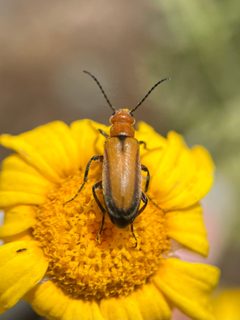
Nemognatha macswaini is a of blister beetle in the Meloidae, Nemognathinae. It was described by W.R. Enns in 1956. The species is found in North America and is part of a characterized by elongated, nectar-feeding mouthparts adapted to flowers with deep corollas. Like other Nemognatha species, it likely feeds on pollen and nectar as an .
Pronunciation
How to pronounce Nemognatha macswaini: //ˌnɛmoʊˈɡneɪθə mækˈswɛni//
These audio files are automatically generated. While they are not always 100% accurate, they are a good starting point.
Images
Distribution
North America. Specific locality data includes records from northwestern Oklahoma, where it has been observed in shortgrass prairie on yellow composite flowers.
Diet
feed on pollen using chewing and on nectar using elongated maxillary . Nectar uptake occurs via capillary action along bristles on the outer surface of the mouthparts rather than through a food canal.
Ecological Role
function as while feeding on flowers. The has been observed on yellow composite flowers (Asteraceae) in prairie .
Similar Taxa
- Nemognatha nigripennisBoth occur in similar prairie and have been found on yellow composite flowers. N. macswaini can be distinguished by examination of specific morphological characters described in Enns (1956).
- Nemognatha luteaCongeneric with similar flower-visiting and elongated mouthpart . N. macswaini is generally smaller and differs in coloration and specific structural features.