
Phodaga marmorata
(Casey, 1891)
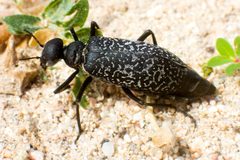
Phodaga marmorata is a of blister beetle in the Meloidae, tribe Eupomphini. The species is characterized by its marbled or mottled coloration, as indicated by its specific epithet. It occurs in both Central and North America. Like other members of Meloidae, it possesses chemical defenses including , a toxic compound that provides protection against .
Pronunciation
How to pronounce Phodaga marmorata: /fəˈdæɡə mɑrˈmɔrætə/
These audio files are automatically generated. While they are not always 100% accurate, they are a good starting point.
Identification
Phodaga marmorata can be distinguished from related in the Phodaga by its marbled color pattern. The genus Phodaga is part of the tribe Eupomphini, which is characterized by specific morphological features within the Meloidae. Phodaga alticeps, the other species in the genus recorded from North America, differs in as suggested by its epithet. Identification to species level requires examination of coloration patterns and possibly genitalic structures.
Images
Distribution
Central America and North America. The has been recorded from both regions, with museum holdings indicating established across this range.
Human Relevance
Like other blister beetles, P. marmorata contains and can cause blistering if handled. The is of interest to entomologists and collectors, with 140 specimens held in the Entomology Research Museum collection as of 2010.
Similar Taxa
- Phodaga alticepsThe only other Phodaga with significant North American records; distinguished by broader and different coloration pattern.
- Eupompha speciesMembers of the same tribe Eupomphini with similar body plans; Eupompha often show more vivid color patterns and different antennal structures.
More Details
Taxonomic authority
Originally described by Casey in 1891, indicating this is a relatively early-described in the North American blister beetle fauna.
Museum holdings
The Entomology Research Museum at UC Riverside holds 140 specimens of this as of April 2010, indicating it is moderately well-represented in collections relative to other Eupomphini.