
Macratriinae
LeConte, 1862
antlike flower beetles
Genus Guides
2- Macratria(antlike flower beetles)
- Salimuzzamania
Macratriinae is a of antlike flower beetles ( Anthicidae) established by LeConte in 1862. The subfamily contains at least two : Macratria Newman, 1838 and Thambospasta Werner, 1974. is concentrated in tropical regions, with significant representation in the Papuan Region, Wallacea, and the Americas. Recent taxonomic work has substantially expanded the known count, with over 30 described species recognized.
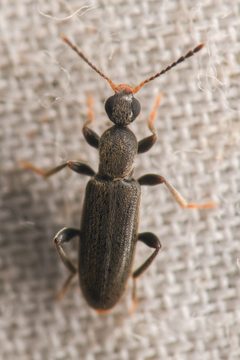
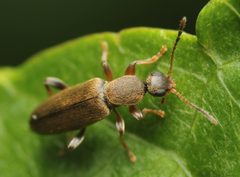
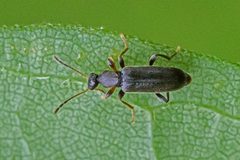
Pronunciation
How to pronounce Macratriinae: //ˌmækrəˈtraɪɪniː//
These audio files are automatically generated. While they are not always 100% accurate, they are a good starting point.
Identification
Macratriinae can be distinguished from other of Anthicidae by a combination of morphological characters including antennal structure and body form. Within the subfamily, the two differ in their distribution: Macratria is widespread in tropical regions worldwide, while Thambospasta is more restricted. -level identification relies on detailed examination of male genitalia and other subtle morphological features.
Images
Distribution
Tropical regions worldwide including the Papuan Region, Wallacea (Indo-Australian transition zone), Central America, and northern South America (Panama, Ecuador, Guyana, Suriname). The Macratria has the broadest distribution, while Thambospasta has more limited range.
Similar Taxa
- AnthicinaeAnother of Anthicidae; Macratriinae differs in antennal structure and body proportions
- Ischaliinae of Anthicidae with different antennal and pronotal characteristics
- Notoxinae of Anthicidae; Macratriinae generally have more elongated body form
More Details
Taxonomic History
The was established by LeConte in 1862. The Macratria, described by Newman in 1838, is the largest and most widespread genus. Thambospasta was described by Werner in 1974 and remains less diverse.
Recent Taxonomic Activity
Between 2022-2023, at least 21 new were described from the Papuan Region, Wallacea, and the Americas, indicating the group remains poorly known and requires continued revisionary work.
Sources and further reading
- BugGuide
- Wikipedia
- iNaturalist taxon
- Catalogue of Life
- New species and records of Macratriinae LeConte, 1862 (Coleoptera: Anthicidae) from the Americas with five new descriptions
- Fourth contribution to the Macratriinae LeConte, 1862 of the Papuan Region and Wallacea (Coleoptera: Anthicidae) with descriptions of sixteen new species