
Notoxinae
Stephens, 1829
Monoceros beetles
Genus Guides
3- Mecynotarsus(monoceros beetles)
- Notoxus(Hooded Antlike Flower Beetles)
- Squamanotoxus
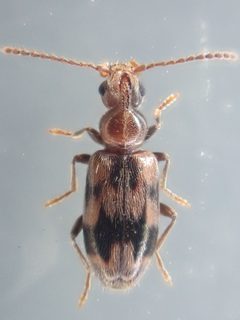
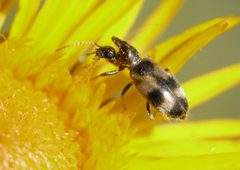
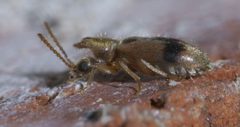
Notoxinae is a of beetles in the Anthicidae, commonly known as monoceros beetles. Members of this group are small, elongate beetles with distinctive antennal . The subfamily was established by Stephens in 1829 and contains multiple distributed across various regions. These beetles are part of the diverse Tenebrionoidea superfamily, which includes many fungus-feeding and detritivorous .
Pronunciation
How to pronounce Notoxinae: /nɔ.tɔk.sɪˌni/
These audio files are automatically generated. While they are not always 100% accurate, they are a good starting point.
Identification
Distinguished from other Anthicidae by the combination of: elongate body form with parallel sides; to weakly clubbed ; and often modified pronotum with lateral projections. Separated from Anthicinae by less -like appearance and different antennal structure. Distinguished from Tomoderinae by body proportions and pronotal shape. Examination of tarsal formula (5-5-4) and genitalia may be required for definitive subfamily assignment.
Images
Habitat
Found in diverse terrestrial including leaf litter, soil surface, decaying wood, and fungal fruiting bodies. Some inhabit arid and semi-arid environments. Microhabitat associations include moss, bark crevices, and accumulated plant debris.
Distribution
Widespread across multiple biogeographic regions including Nearctic, Palearctic, Afrotropical, and Australian regions. Presence documented in North America, Europe, Africa, and Australia with varying -level composition across regions.
Seasonality
activity patterns vary by region; generally active during warmer months in temperate zones. Some may be found year-round in suitable microhabitats in tropical and subtropical areas.
Behavior
are fast-moving and readily drop from substrates when disturbed. Many are cryptic in habit, remaining concealed in debris and crevices. Antennal and rapid escape responses have been observed.
Ecological Role
Presumed and fungivores based on -level patterns and microhabitat associations. Contribute to decomposition processes in terrestrial . Serve as prey for small in soil and litter .
Human Relevance
No significant direct economic impact. Occasionally encountered in pitfall trap surveys and ecological studies. Some may be indicators of quality in conservation assessments.
Similar Taxa
- AnthicinaeSimilar body form but generally more -like in appearance with different antennal club structure and pronotal proportions
- TomoderinaeOverlapping size range and use; distinguished by more compact body and different pronotal
- AderidaeSimilar small elongate beetles in same superfamily; distinguished by different antennal insertion and tarsal structure
More Details
Taxonomic History
Notoxinae has undergone various taxonomic treatments, with some authors treating component differently. The is currently recognized as distinct within Anthicidae based on morphological and molecular evidence.
Generic Diversity
The contains multiple including Notoxus, which gives the group its . Generic-level diversity is highest in arid regions of the Old World.