
Eutheiini
Casey, 1897
Genus Guides
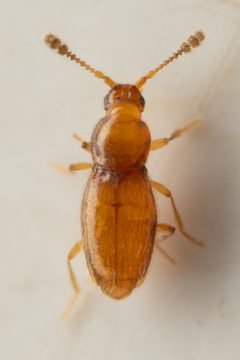
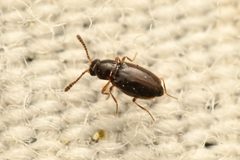
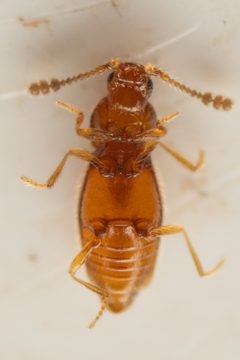
4Eutheiini is a tribe of minute ant-like stone beetles in the Scydmaeninae (Staphylinidae). The tribe comprises approximately eight extant and fossil , including the widespread genus Eutheia and the genus Veraphis. Members are characterized by their small body size and are distributed across the Holarctic region with a notable sub-Himalayan component in Asia.
Pronunciation
How to pronounce Eutheiini: /juː.ˈθeɪ.aɪ.aɪ.naɪ/
These audio files are automatically generated. While they are not always 100% accurate, they are a good starting point.
Identification
Eutheiini are minute beetles, generally less than 2 mm in length, with the characteristic compact body form typical of Scydmaeninae. Distinctive features include reduced exposing multiple abdominal tergites and with a weakly to moderately developed club. The tribe can be distinguished from related tribes within Scydmaeninae by specific characters of the mandibular structure and prosternal , though precise identification to tribe level requires examination of microscopic features.
Images
Habitat
Members of Eutheiini have been recorded from forest floor litter and soil . Specific microhabitat preferences for most remain poorly documented.
Distribution
The tribe has a broad Holarctic distribution with records from Europe (including France, Slovenia, Greece, Bulgaria), North Africa (Algeria, Morocco, Tunisia), and Asia (China: Gansu, Sichuan; sub-Himalayan region). Fossil are known from amber deposits.
Similar Taxa
- CephenniiniAnother tribe within Scydmaeninae; distinguished by differences in mandibular and body proportions, though precise separation requires detailed morphological examination.
- ScydmaeniniLarger tribe in the same ; members generally differ in antennal club structure and details of the prosternal process.
More Details
Taxonomic History
Eutheiini was established by Casey in 1897. The tribe has undergone significant revision, with modern treatments recognizing multiple including Eutheia (the largest genus), Veraphis, Paeneutheia, and several others. Two fossil genera, Archeutheia and Vertheia, have been described from Cretaceous amber, indicating an ancient lineage.
Species Diversity
The Eutheia contains numerous , with regional faunas such as that of France having received detailed taxonomic treatment. Recent work has described new species from China, expanding the known geographic range of the tribe in Asia.