
Megastilicus
Casey, 1889
Species Guides
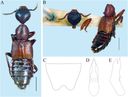
1Megastilicus is a of myrmecophilous rove beetles (Staphylinidae: Paederinae) to North America. The genus was long considered , containing only Megastilicus formicarius Casey, 1889, until the description of Megastilicus iowaensis in 2021. These beetles are specialized associates of ants, particularly Formica ulkei. The genus is classified in the subtribe Stilicina based on morphological characteristics.
Pronunciation
How to pronounce Megastilicus: /ˌmɛɡəˈstɪlɪkəs/
These audio files are automatically generated. While they are not always 100% accurate, they are a good starting point.
Identification
Separation from other Stilicina requires detailed morphological examination. The two known , M. formicarius and M. iowaensis, are distinguished by features of the male and genital segments. An identification key is available in the 2021 taxonomic revision.
Images
Distribution
North America. Specific documented localities include records for M. formicarius and M. iowaensis with new state records reported in the 2021 revision.
Host Associations
- ants - myrmecophilyexplicitly stated as myrmecophilous; specific association with Formica ulkei Emery inferred from cited literature (Park 1929, 1935; Holmquist 1928a, 1928b)
Behavior
Myrmecophily: specialized association with colonies.
Similar Taxa
- other Stilicina generaMegastilicus shares subtribe Stilicina membership with multiple related ; distinguished by specific morphological features detailed in taxonomic revisions
More Details
Taxonomic history
The remained for over 130 years until the 2021 description of M. iowaensis. A lectotype was designated for M. formicarius in the 2021 revision.
Research needs
Direct observational studies of associations, use, and natural history are lacking; current knowledge relies on museum specimens and historical literature.