
Megastilicus formicarius
Casey, 1889
Megastilicus formicarius is a myrmecophilous rove beetle (Staphylinidae: Paederinae) native to North America. It was the sole in its until the 2021 description of M. iowaensis. The species is obligately associated with ants, specifically documented with Formica ulkei colonies. Like other myrmecophilous Paederinae, it likely lives within nests, though specific ecological details remain poorly documented. The species is known from museum specimens across northeastern and midwestern North America.
Pronunciation
How to pronounce Megastilicus formicarius: //mɛɡəˈstɪlɪkəs fɔːrˈmɪkɛriəs//
These audio files are automatically generated. While they are not always 100% accurate, they are a good starting point.
Identification
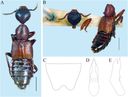
Megastilicus formicarius can be distinguished from the congeneric M. iowaensis by features of the and genital segments. The Megastilicus is characterized by morphological features placing it in the subtribe Stilicina. Detailed examination of male genitalia is required for -level identification within the genus.
Images
Habitat
nests, specifically associated with Formica ulkei colonies. Specific microhabitat preferences within nests are undocumented.
Distribution
North America: Canada (Manitoba, Newfoundland and Labrador, Ontario) and USA (Iowa, Illinois, Indiana, Massachusetts, Maine, Missouri, New Hampshire, New Jersey, Ohio, Pennsylvania, Texas).
Host Associations
- Formica ulkei - myrmecophilousDocumented ; lives within colonies
Behavior
Myrmecophilous: obligately associated with colonies. Specific behavioral adaptations to ant colony life are undocumented.
Similar Taxa
- Megastilicus iowaensisCongeneric described in 2021; distinguished by and genital segment
Sources and further reading
- BugGuide
- GBIF taxonomy match
- iNaturalist taxon
- Catalogue of Life
- sweetpotato weevil (Cylas formicarius) - Entomology Today
- Cylas formicarius Archives - Entomology Today
- Battle Beneath the Vines: Defending Sweet Potatoes From Fearsome Pests
- Are Sweetpotato Weevils Differentially Attracted to Certain Colors?
- The Entomology Profession Archives - Page 92 of 102 - Entomology Today
- Redescription of the genus Megastilicus Casey (Staphylinidae, Paederinae) with the description of a new species