
Stilicina
Casey, 1905
Genus Guides
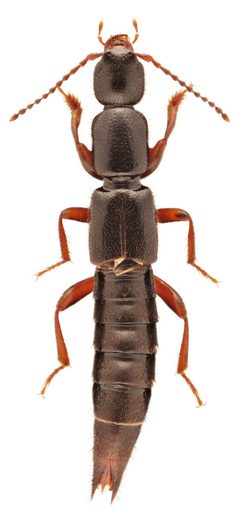
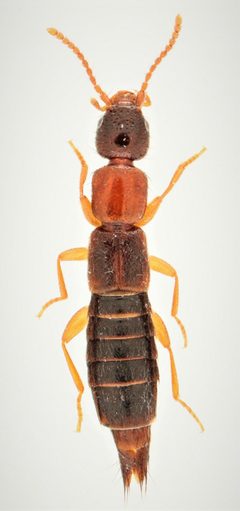
4Stilicina is a subtribe of rove beetles ( Staphylinidae) established by Casey in 1905. It contains approximately nine distributed across temperate and tropical regions. Members are small to medium-sized beetles with the characteristic abbreviated of staphylinids. The subtribe is classified within the tribe Lathrobiini of the Paederinae.
Pronunciation
How to pronounce Stilicina: /stɪˈlɪkɪnə/
These audio files are automatically generated. While they are not always 100% accurate, they are a good starting point.
Identification
Stilicina can be distinguished from related subtribes within Lathrobiini by combinations of characters including antennal structure, pronotal shape, and male genitalia . Specific diagnostic features vary by ; for example, Rugilus often show distinctive pronotal punctation patterns, while Pachystilicus species tend to be more robust with shorter relative to body length. Accurate identification to subtribe level generally requires examination of microscopic characters and reference to specialized taxonomic keys.
Images
Habitat
Members of Stilicina occupy diverse terrestrial including leaf litter, soil, decaying wood, and moss. Many are found in moist, shaded microhabitats. Some such as Rugilus are frequently collected in riparian zones and wetland margins. The subtribe shows broad ecological across its geographic range.
Distribution
The subtribe has a wide distribution including North America, Europe, Asia, and parts of Africa and South America. Individual show varying ranges: Rugilus is primarily Palearctic with some Nearctic representation, while Acrostilicus and Megastilicus are restricted to the Nearctic region. Panscopaeus and Stilicoderus have broader tropical distributions.
Seasonality
activity patterns vary by and latitude. In temperate regions, most species are active from spring through autumn, with peak abundance during summer months. Tropical species may show year-round activity with peaks during rainy seasons. Specific phenological data are limited for many .
Ecological Role
Stilicina function as and scavengers in soil and litter . They contribute to nutrient cycling through consumption of small and organic detritus. Their role in as prey for larger arthropods and small vertebrates has been documented in some but remains understudied across the subtribe.
Human Relevance
No direct economic importance is documented. Some occasionally occur in such as compost heaps and garden mulch. They are not known to be pests or beneficial organisms in agricultural or medical contexts.
Similar Taxa
- MedoninaAnother subtribe within Lathrobiini; distinguished by differences in antennal insertion, mesocoxal structure, and . Medonina often show more uniform body sculpturing compared to the variable patterns seen in Stilicina.
- Lathrobiini (remaining subtribes)Stilicina differs from other Lathrobiini subtribes (such as Lathrobiina) in details of the mouthpart structure, tarsal formula, and male genitalia configuration, though these characters require microscopic examination for reliable separation.
More Details
Taxonomic History
Casey established Stilicina in 1905 based primarily on North American material. The concept has been refined through subsequent works, particularly by European and Japanese systematists who expanded the circumscription to include previously placed elsewhere in Paederinae. The subtribe remains taxonomically active with new and generic revisions published regularly.
Genera Composition
The subtribe currently comprises nine accepted : Acrostilicus, Eustilicus, Lathrorugilus, Megastilicus, Pachystilicus, Panscopaeus, Rugilus, Stilicoderus, and Stiliderus. The monophyly of Stilicina has been questioned in some phylogenetic analyses, suggesting potential future reclassification of certain genera.