
Lathrobiina
Laporte de Castelnau, 1835
Genus Guides
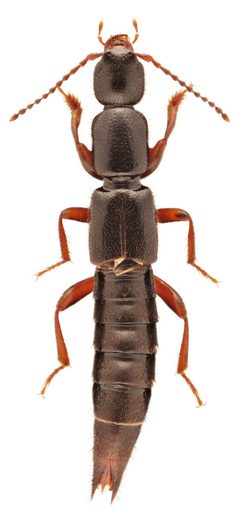
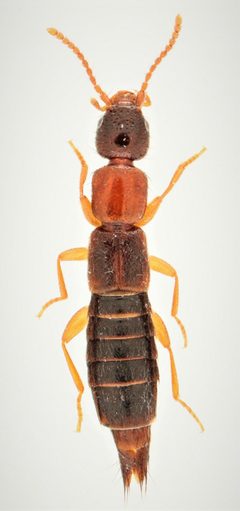
5Lathrobiina is a subtribe of rove beetles (Staphylinidae: Paederinae) containing approximately 25 . Members are small to medium-sized beetles characterized by the typical staphylinid body plan: shortened exposing most of the . The subtribe has a global distribution with particular diversity in the Palaearctic region. Recent taxonomic revisions have recognized new genera based on subtle morphological distinctions, indicating ongoing refinement of the group's classification.
Pronunciation
How to pronounce Lathrobiina: /læθˈroʊbiˌaɪnə/
These audio files are automatically generated. While they are not always 100% accurate, they are a good starting point.
Identification
Identification to subtribe level requires examination of characters distinguishing Lathrobiini from other Paederinae tribes, including details of mouthpart structure, tarsal formula, and male genitalia. Within Lathrobiina, are distinguished by combinations of characters including body form, punctation patterns, antennal structure, and aedeagal . -level identification often requires dissection of male genitalia and comparison with .
Images
Distribution
Global distribution with documented records from the East Palaearctic region including Japan, China (Gongga Shan, Qinling Shan, Shaanxi, Daba Shan, Yunnan, Chongqing, Sichuan), and Taiwan. The subtribe as a whole is more broadly distributed, with occurring across multiple biogeographic regions.
Similar Taxa
- PaederiniOther subtribe within Paederinae; distinguished by different combinations of mouthpart, tarsal, and genitalic characters
- StaphylininiTribe within Staphylininae (not Paederinae); members generally have more elongated body forms and different tarsal structures
More Details
Taxonomic instability
The classification of Lathrobiina has been subject to revision, with new such as Elytrobium and Sinlathrobium described in 2013 based on morphological distinctions from Lathrobium and allied genera. Many within these new genera are known from extremely limited material—some from single localities or specimens only—suggesting substantial undiscovered diversity and poorly understood distributions.