
Acruliopsis tumidula
(Mäklin, 1853)
Acruliopsis tumidula is a small rove beetle (Staphylinidae: Omaliinae) described from the Pacific Northwest of North America. It is one of few in the Acruliopsis, a group of omaliine rove beetles characterized by compact body form and association with forest floor . The species has been recorded from coastal and montane regions of British Columbia, Washington, Oregon, and Alaska.
Pronunciation
How to pronounce Acruliopsis tumidula: //ˌæ.kruː.li.ˈɒpsɪs tuːˈmɪ.djuː.lə//
These audio files are automatically generated. While they are not always 100% accurate, they are a good starting point.
Identification
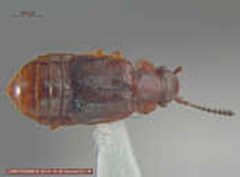
Acruliopsis tumidula can be distinguished from other Omaliinae by its compact, somewhat tumid (swollen) body form, reflected in the specific epithet. The Acruliopsis is characterized by shortened typical of Staphylinidae, with most abdominal segments exposed, and with distinct clubbed segments. Separation from the related genus Omalium requires examination of male genitalia and detailed microsculpture of the pronotum and elytra.
Images
Habitat
Forest floor in coastal and montane regions; has been recorded from coniferous and mixed woodlands. Specific microhabitat preferences are poorly documented but consistent with other Omaliini in occurring among leaf litter, decaying wood, and moss.
Distribution
Pacific Northwest of North America: Canada (British Columbia), USA (Alaska, Oregon, Washington).
Ecological Role
Member of forest floor ; likely contributes to decomposition of plant material and nutrient cycling, as inferred from -level of Omaliinae.
Similar Taxa
- Omalium spp.Similar compact omaliine rove beetles; distinguished by genitalic and microsculptural characters requiring microscopic examination.
- Other Acruliopsis spp.Very few known; separation requires comparison of and detailed morphological study.