
Omalium
Gravenhorst, 1802
Species Guides
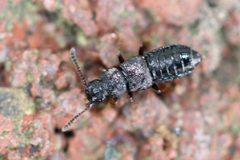
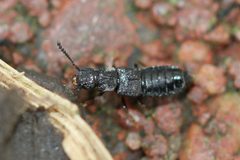
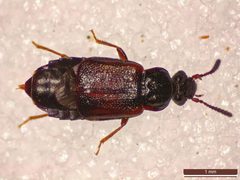
5Omalium is a of ocellate rove beetles (Staphylinidae: Omaliinae) containing at least 70 described distributed across the Holarctic region. The genus has been subject to extensive taxonomic revision, with species organized into morphologically-based species groups including the Acutangulum, Amplissimum, Caesum, Oxyacanthae, and Rivulare groups. Recent revisions have described numerous new species from the Himalayan region, China, Siberia, and the Far East.
Pronunciation
How to pronounce Omalium: //ɔˈmeɪliəm//
These audio files are automatically generated. While they are not always 100% accurate, they are a good starting point.
Identification
identification in Omalium relies heavily on male genitalic characters, particularly the shape of the and presence of female accessory . Species groups are distinguished by combinations of body proportions, punctation patterns, and antennal structure. The is characterized by the presence of ocelli (simple ) on the , a trait reflected in the 'ocellate rove beetles'.
Images
Distribution
Widespread across the Holarctic region. Documented from: Europe (Scandinavia: Denmark, Norway, Sweden); Russia (Siberia, Far East, Ural Mountains eastward, including Kemerovo Area, Kuril Islands, Maritime Province, and numerous federal subjects); Central Asia (Middle Asia, Pakistan); East Asia (China: Sichuan, Shaanxi, Yunnan, Anhui, Gansu, Jiangxi, Qinghai, Zhejiang, Hubei, Xizang/Tibet, Heilongjiang, Fujian; Taiwan; Japan; South Korea; Mongolia); South Asia (Nepal: Bagmati, Koshi, central/eastern/western regions; India: Uttarakhand, Kashmir, Punjab, West Bengal); Caucasus region (Armenia, Georgia); Turkey; and Iran.
More Details
Species Groups
Taxonomic revisions have established groups based on morphological similarity: Acutangulum group (Himalayas, China), Amplissimum group (Himalayas, Siberia, Mongolia), Caesum group (Palaearctic, including O. caesum and O. littorale), Oxyacanthae group (Holarctic, including O. oxyacanthae), and Rivulare group (widespread Palaearctic, including O. rivulare). Some species remain unassigned to groups due to uncertain taxonomic status.
Taxonomic Activity
The has undergone intensive recent revision. The Himalayan fauna alone required establishment of five groups for 18 species, with seven new species described. The Chinese fauna includes 19 species with 15 described as new in a single 2024 revision. Three new synonymies were established in a 2025 eastern Palaearctic review, and numerous lectotype designations have stabilized .
Nomenclatural Notes
The was established by Gravenhorst in 1802. Several have been subject to repeated misidentification, leading to exclusions from regional faunas (e.g., O. allardii, O. excavatum, and O. foraminosum removed from Siberian fauna). The species O. chinese J.-K. Li, 1993 from Heilongjiang remains of uncertain taxonomic status.
Sources and further reading
- BugGuide
- Wikipedia
- GBIF taxonomy match
- iNaturalist taxon
- NCBI Taxonomy
- Catalogue of Life
- Review of the genus Omalium Gravenhorst, 1802 (Coleoptera: Staphylinidae: Omaliinae: Omaliini) of China
- A revision of the genus Omalium Gravenhorst, 1802 (Coleoptera: Staphylinidae: Omaliinae) of the Himalayan region
- Three new species and records of the genus Omalium Gravenhorst, 1802 (Coleoptera: Omaliinae: Omaliini) from the eastern Palaearctic Region
- Faunistic and diagnostic notes on some species of the genus Omalium Gravenhorst, 1802 of Caucasus, Turkey and Iran (Coleoptera: Staphylinidae: Omaliinae, Omaliini)
- Review of the genus Omalium Gravenhorst, 1802 (Coleoptera: Staphylinidae: Omaliinae: Omaliini) of Siberia and Far Eastern Russia, with notes on some species from Mongolia and Japan