
Omalium rivulare
(Paykull, 1789)
Omalium rivulare is a Holarctic ocellate rove beetle in the Staphylinidae. Originally described as Staphylinus rivularis by Paykull in 1789, it serves as the type for the Rivulare species group within the Omalium. The species has been recorded across Europe, northern Asia, and has been introduced to North America. Synonymy with O. kabakovi was established in 2025.
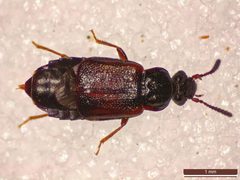
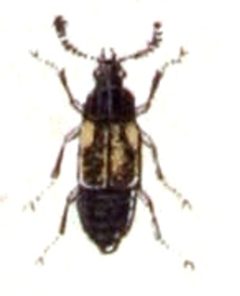
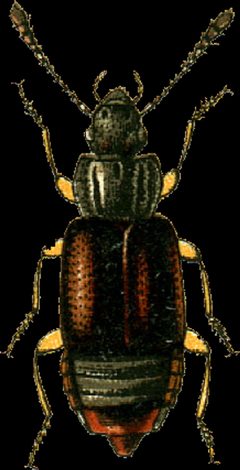
Pronunciation
How to pronounce Omalium rivulare: /oʊˈmeɪliəm rɪˈvʊlɑːreɪ/
These audio files are automatically generated. While they are not always 100% accurate, they are a good starting point.
Images
Distribution
Native to the Palearctic region with records from Europe, Russia (including Siberia, Far Eastern Russia, and multiple federal subjects), Turkey, Iran, Armenia, Azerbaijan, Kazakhstan, Israel, Iceland, and North Africa (Algeria, Egypt). Introduced to North America with established in Canada (British Columbia, New Brunswick, Newfoundland and Labrador, Nova Scotia, Ontario, Quebec) and the United States (Alaska, Alabama, California, Connecticut, Idaho, Indiana, Massachusetts, Maryland, Maine, Michigan, New Hampshire, New York, New Jersey, Ohio, Oregon, Pennsylvania, Rhode Island, South Carolina, Virginia, Vermont, Washington).
Similar Taxa
- Omalium littoraleBoth occur in overlapping Palearctic ranges and have historically been confused in some regional faunas; O. rivulare is distinguished by its placement in the Rivulare species group with different aedeagal structure
- Omalium oxyacanthaeMember of the Oxyacanthae group with Holarctic distribution; differs from O. rivulare in group assignment and associated morphological characters
- Omalium caesumMember of the Caesum group; distinguished from O. rivulare by group characteristics and typically more western Palearctic distribution
Sources and further reading
- BugGuide
- Wikipedia
- GBIF taxonomy match
- iNaturalist taxon
- NCBI Taxonomy
- Catalogue of Life
- Review of the genus Omalium Gravenhorst, 1802 (Coleoptera: Staphylinidae: Omaliinae: Omaliini) of China
- A revision of the genus Omalium Gravenhorst, 1802 (Coleoptera: Staphylinidae: Omaliinae) of the Himalayan region
- Three new species and records of the genus Omalium Gravenhorst, 1802 (Coleoptera: Omaliinae: Omaliini) from the eastern Palaearctic Region
- Faunistic and diagnostic notes on some species of the genus Omalium Gravenhorst, 1802 of Caucasus, Turkey and Iran (Coleoptera: Staphylinidae: Omaliinae, Omaliini)
- Review of the genus Omalium Gravenhorst, 1802 (Coleoptera: Staphylinidae: Omaliinae: Omaliini) of Siberia and Far Eastern Russia, with notes on some species from Mongolia and Japan