
Dinardilla liometopi
Wasmann, 1901
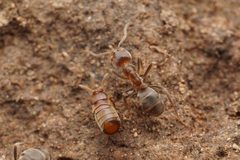
Dinardilla liometopi is a small rove beetle described by Wasmann in 1901. It belongs to the tribe Sceptobiini within the large Aleocharinae. The occurs in the southwestern United States and Mexico. Very few observations exist in public databases, indicating it is rarely collected or potentially cryptic in habit.
Pronunciation
How to pronounce Dinardilla liometopi: /dɪˈnɑːrdɪlə liːoʊˈmɛtoʊpi/
These audio files are automatically generated. While they are not always 100% accurate, they are a good starting point.
Identification
As a member of Sceptobiini, D. liometopi likely exhibits the tribe's characteristic compact body form and reduced wing venation typical of aleocharine rove beetles. Definitive identification requires examination of male genitalia and detailed mouthpart structure. It can be distinguished from other Dinardilla by geographic range and subtle differences in proportions, though these require taxonomic knowledge.
Images
Distribution
Southwestern United States (Arizona, Colorado, New Mexico) and Mexico.
Host Associations
- Liometopum - myrmecophily name 'liometopi' and tribal placement in Sceptobiini (specialized associates) strongly suggest association with Liometopum ants, though direct records for this are not documented in available sources.
Similar Taxa
- Other Dinardilla speciesShare compact aleocharine body plan and myrmecophilous habits; require genitalic dissection for reliable separation.
- Other Sceptobiini genera (e.g., Sceptobius)Similar -associated and convergent ; differ in details of tarsal structure and abdominal chaetotaxy.
More Details
Taxonomic history
Originally described by Wasmann in 1901, a period when he extensively documented myrmecophilous beetles. The specific epithet references Liometopum ants, following Wasmann's convention of naming after their .
Data scarcity
Only 2 observations in iNaturalist and limited museum records suggest this is genuinely rare, difficult to , or associated with poorly studied colonies. No modern ecological studies have been published.