
Eumicrota
Casey, 1906
Species Guides
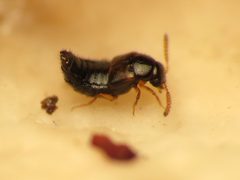
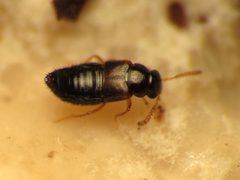
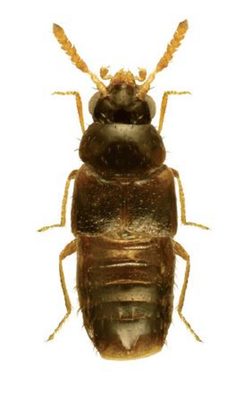
2Eumicrota is a of rove beetles (Staphylinidae) in the Aleocharinae, tribe Homalotini, and subtribe Gyrophaenina. The genus was established by Thomas L. Casey in 1906. Members of this genus are small, compact rove beetles associated with fungal . The genus is poorly studied, with limited published information on -level diversity and .
Pronunciation
How to pronounce Eumicrota: /juːˈmaɪkroʊtə/
These audio files are automatically generated. While they are not always 100% accurate, they are a good starting point.
Images
Habitat
Members of the subtribe Gyrophaenina, including Eumicrota, are consistently associated with fungi, particularly fleshy basidiomycete mushrooms. These beetles inhabit the fruiting bodies of mushrooms where they complete their development.
Similar Taxa
- GyrophaenaGyrophaena is the type of subtribe Gyrophaenina and shares the compact body form and mushroom-associated . Eumicrota can be distinguished by subtle differences in antennal structure and pronotal shape, though definitive identification often requires examination of male genitalia.
- PhyllodrepaAnother in Gyrophaenina with similar ecological preferences. Eumicrota generally have a more rounded and compact body profile compared to the more elongate Phyllodrepa.
- AgathidiumAgathidium ( Leiodidae) also inhabit mushrooms and have a similar compact, rounded appearance. Eumicrota can be distinguished by the characteristic aleocharine antennal insertion and the presence of defensive gland openings at the abdominal tergite margins, features absent in Leiodidae.