
Agathidium
Panzer, 1796
slime mold beetles
Species Guides
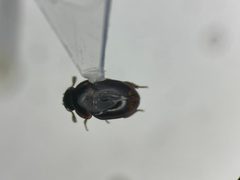
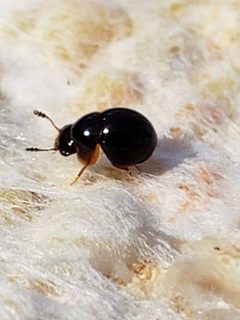
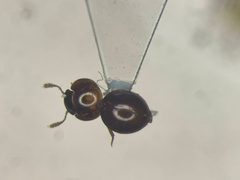
13Agathidium is a of small beetles in the Leiodidae, notable as the largest insect group documented that principally feeds on slime moulds. The genus includes approximately 100 described distributed primarily across the Holarctic region. Several species have gained public attention through their unconventional honoring political figures and fictional characters. Some species possess the ability to roll into a nearly complete sphere, and males of certain species exhibit asymmetrical mandibular horns used in combat and courtship.
Pronunciation
How to pronounce Agathidium: /ˌæɡəˈθɪdiəm/
These audio files are automatically generated. While they are not always 100% accurate, they are a good starting point.
Identification
The ability to roll into a nearly complete sphere distinguishes some from most other beetles. Males with left mandibular horns can be recognized by this asymmetrical feature, which is used to dislodge rival males. As the largest group of slime-mould-feeding insects, association with slime mould fruiting bodies provides a strong ecological indicator.
Images
Habitat
Old-growth and managed forests; natural forests of high conservation value. Associated with mid-decayed aspen, spruce, and birch logs. At least one requires minimum densities of coarse woody debris (80 aspen and spruce logs per hectare) even when slime moulds are present.
Distribution
Holarctic distribution with records from Denmark, Norway, Sweden, Finland, and the northeastern United States (including Vermont). Eastern Finland represents a documented stronghold for at least one .
Diet
Slime moulds (Myxomycetes). The represents the largest insect group documented that principally feeds on slime moulds. At least one feeds exclusively on Trichia decipiens.
Host Associations
- Trichia decipiens - exclusive For Agathidium pulchellum
Behavior
Some can roll themselves into an almost complete sphere. Males use asymmetrical mandibular horns in combat with rival males and in with females.
Ecological Role
Specialized consumers of slime moulds in forest . Dependent on old-growth forest conditions and coarse woody debris. At least one serves as an indicator of high-conservation-value natural forests.
Human Relevance
Several named after prominent political figures (George W. Bush, Dick Cheney, Donald Rumsfeld) and fictional characters (Darth Vader) have generated public interest and media coverage, highlighting the role of unconventional in science communication. The includes of conservation concern in European old-growth forests.
Similar Taxa
- other Leiodidae generaAgathidium is distinguished by its specialization on slime moulds and, in some , the ability to conglobate into a sphere; most other leiodids feed on different substrates such as fungi, carrion, or subterranean resources
More Details
Notable species names
A. bushi, A. cheneyi, and A. rumsfeldi were named by Cornell entomologists Kelly B. Miller and Quentin D. Wheeler in homage to political figures. A. vaderi was named after the fictional Darth Vader from Star Wars.
Sources and further reading
- BugGuide
- Wikipedia
- GBIF taxonomy match
- iNaturalist taxon
- NCBI Taxonomy
- Catalogue of Life
- The Wonderful World of Bugs | Bug Squad
- Agathidium vaderi Archives - Entomology Today
- Curious Scientific Names Can Make Insects Famous
- Habitat associations of Agathidium pulchellum, an endangered old-growth forest beetle species living on slime moulds
- Asymmetrical male mandibular horns and mating behavior inAgathidiumPanzer (Coleoptera: Leiodidae)