
Gyrophaenina
Kraatz, 1856
Genus Guides
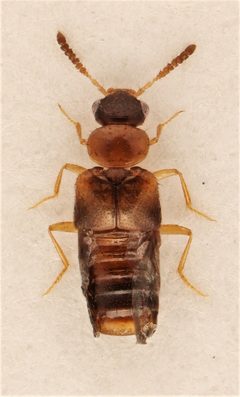
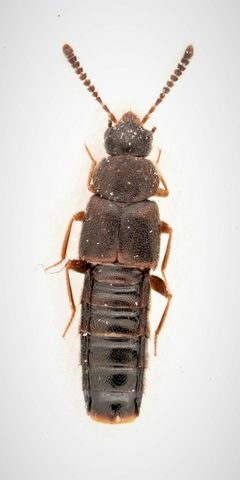
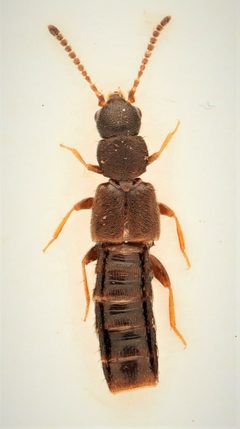
5Gyrophaenina is a subtribe of rove beetles (Staphylinidae: Aleocharinae) established by Kraatz in 1856. Members of this subtribe are small-bodied beetles characterized by their association with fungi, particularly growing on decaying wood. The subtribe is classified within the tribe Homalotini and is distinguished by morphological adaptations related to their mycophagous habits. The group has been documented across multiple continents with over 1,400 observations recorded on iNaturalist, indicating moderate but widespread detection by naturalists.
Pronunciation
How to pronounce Gyrophaenina: //ˌd͡ʒaɪroʊˈfiːnɪnə//
These audio files are automatically generated. While they are not always 100% accurate, they are a good starting point.
Identification
Gyrophaenina can be distinguished from other subtribes within Homalotini by a combination of characters including: body form adapted for moving in confined spaces between fungal gills; with distinctive clubbed or gradually thickened segments; and tarsal structure suited for clinging to fungal substrates. Members often show reduced or modified typical of Staphylinidae, with abdominal segments partially exposed. Specific generic-level identification requires examination of mouthpart structure, particularly the maxillary palpi, and details of the mesoventral intercoxal process.
Images
Habitat
within Gyrophaenina are primarily found in association with fungi, especially basidiomycete fruiting bodies growing on decaying wood in forested environments. include dead logs, stumps, and standing dead trees in both coniferous and deciduous forests. Some species have been recorded from bracket fungi and polypores. Moisture availability and fungal diversity are key habitat requirements.
Distribution
Documented from multiple continents including North America, Europe, and Asia. Distribution patterns follow suitable fungal availability rather than strict climatic zones. Specific range boundaries for the subtribe as a whole are not comprehensively mapped due to taxonomic revisions at the and level.
Seasonality
Activity patterns correspond with fungal fruiting seasons, generally spring through autumn in temperate regions. Peak abundance typically occurs during periods of high humidity and active fungal sporulation. Some may be found year-round in favorable microhabitats.
Diet
Mycophagous; feeds on fungal tissues, particularly the hymenophore (spore-bearing surfaces) of basidiomycete mushrooms and bracket fungi. Has been observed consuming spores and hyphal tissues.
Host Associations
- Basidiomycota - food sourcePrimary dietary substrate; specific fungal vary by and region
- Polyporaceae - Bracket fungi serving as microhabitat and food source
Behavior
Members exhibit tightly linked to fungal substrates, including rapid movement within confined spaces between gills or pores of fruiting bodies. When disturbed, individuals often fold appendages and remain motionless, exploiting their small size and flattened bodies to avoid detection. likely occurs through active to new fungal resources.
Ecological Role
Functions as a fungal decomposer consumer, potentially influencing fungal dynamics through selective feeding. May contribute to spore through incidental transport on body surfaces. Serves as prey for other within the dead wood .
Human Relevance
No direct economic importance. Occasionally encountered by mushroom collectors and forest ecologists. Presence indicates functional dead wood and fungal diversity. Some may be collected for scientific study of fungus- associations.
Similar Taxa
- other Homalotini subtribesDistinguished by Gyrophaenina's specialized morphological adaptations for mycophagy and association with fleshy fungi rather than other microhabitats
- OxypodiniAnother aleocharine tribe with some mycophagous members; Gyrophaenina differs in tarsal and mouthpart structure
More Details
Taxonomic History
The subtribe has undergone multiple revisions, with generic concepts refined through phylogenetic studies. Some formerly included have been transferred to other subtribes based on morphological and molecular data.
Research Needs
details remain poorly documented for most . Larval stages are rarely collected and described. Fungal specificity requires further investigation across geographic ranges.