
Thanatophilus truncatus
(Say, 1823)
Northern Carrion Beetle, Silky Carrion Beetle
Thanatophilus truncatus is a carrion beetle in the Silphidae, found across Central and North America. As a member of the Thanatophilus, it is associated with decomposing animal matter and plays a role in nutrient cycling. The was first described by Thomas Say in 1823 and is documented from the southwestern United States through Mexico.
Pronunciation
How to pronounce Thanatophilus truncatus: /θænəˈtɒfɪləs trʌŋˈkeɪtəs/
These audio files are automatically generated. While they are not always 100% accurate, they are a good starting point.
Identification
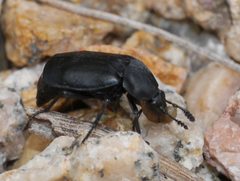
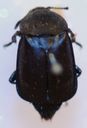
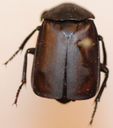
Distinguished from other Thanatophilus by the truncated (shortened) appearance of the elytral apex, referenced in the specific epithet 'truncatus.' The combination of silky , dark coloration, and association with carrion separates it from superficially similar dermestid beetles ( Dermestidae), which typically have more distinct patterns and clubbed with different segment structure. Similar species T. lapponicus has a more northerly distribution and may show differences in pronotal shape.
Images
Appearance
are robust, oval-shaped beetles with a somewhat flattened profile. The body is covered with fine, silky setae (hairs) that give it a distinctive sheen. Coloration is typically dark brown to black. are clubbed with segments that broaden distally. are complete, covering the , and may show subtle surface sculpturing. Size ranges approximately 8–15 mm in length.
Habitat
Associated with decomposing animal remains including carcasses and bones. Found in terrestrial environments ranging from grasslands to forested areas where vertebrate carrion occurs. are attracted to carrion in various stages of decomposition, from fresh to dry.
Distribution
Central America and North America. Documented from the southwestern United States (Arizona, Colorado, Kansas, Nebraska, New Mexico, Texas) southward through Mexico.
Seasonality
have been observed from March through October, with peak activity likely corresponding to warmer months and availability of carrion resources.
Diet
and larvae feed on decomposing animal matter. Larvae develop within carcasses, consuming soft tissues and associated microbial fauna.
Life Cycle
Complete with , larval, pupal, and stages. Larvae are elongate, somewhat flattened, and adapted for burrowing in carrion. Developmental timing varies with temperature and resource quality.
Behavior
are attracted to carrion by olfactory cues and may arrive shortly after death to oviposit. Both adults and larvae are active in consuming decaying tissue. Adults are capable of and can locate scattered carcass resources across landscapes.
Ecological Role
Primary decomposer facilitating breakdown of vertebrate carcasses. Nutrient cycling through consumption and processing of carrion . Serves as prey for vertebrate scavengers and at carcass sites.
Human Relevance
Contributes to natural decomposition processes; potential utility in for estimating postmortem intervals based on timing. No documented economic pest status.
Similar Taxa
- Thanatophilus lapponicusShares similar , use, and 'Northern Carrion Beetle,' but has more northerly distribution (holarctic) and may differ in pronotal shape
- Dermestes marmoratusSimilar size, coloration, and carrion association, but belongs to Dermestidae with distinctly clubbed and patterns rather than silky
- Nicrophorus spp.Also Silphidae with carrion association, but larger, more robust, with distinctive orange-red elytral markings and different behavioral (burying beetles)
More Details
Taxonomic Note
Some sources (GBIF, iNaturalist) list as Staphylinidae due to classification system differences, but modern treatments place Thanatophilus in Silphidae. NCBI and Catalogue of Life confirm Silphidae placement.
Nomenclature
Originally described as Silpha truncata by Thomas Say in 1823, later transferred to Thanatophilus.
Sources and further reading
- BugGuide
- Wikipedia
- GBIF taxonomy match
- iNaturalist taxon
- NCBI Taxonomy
- Catalogue of Life
- Christian Nansen: An Entomologist on the Move | Bug Squad
- The Silence of the Cicadas | Bug Squad
- Encyrtid Holdings | Entomology Research Museum
- Why Bananas and Sand Will Improve Response to an Invasive Beetle
- Bug Eric: Beetles from Bones
- Bug Eric: More Beetles from Bones