
Leiodes
Latreille, 1797
round fungus beetles
Species Guides
7- Leiodes appalachiana
- Leiodes assimilis(round fungus beetle)
- Leiodes horni
- Leiodes neglecta
- Leiodes puncticollis
- Leiodes punctostriata(round fungus beetle)
- Leiodes rufipes
Leiodes is a of small, rounded beetles in the Leiodidae, comprising at least 110 described with a primarily Holarctic distribution. Most species are subterranean mycophages, with several species acting as economically significant pests of truffle orchards. The genus exhibits specialized morphological and behavioral adaptations for life in ephemeral and solid fungi, including unique larval structures such as pseudomycangia.
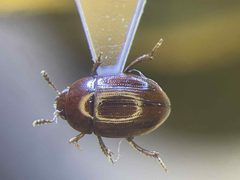
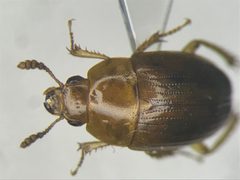
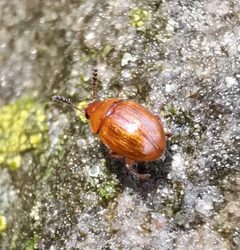
Pronunciation
How to pronounce Leiodes: //laɪˈoʊdiːz//
These audio files are automatically generated. While they are not always 100% accurate, they are a good starting point.
Images
Habitat
Subterranean; primarily associated with hypogeous fungi in soil. Members of the occupy diverse fungal substrates including truffles (Tuber ), mycelia in grass roots, and rhizoids of mosses. characterized by endogean (underground) conditions with stable temperature and high humidity.
Distribution
Holarctic distribution predominates, with additional records from the northern Neotropical region, Oriental region, and South Africa. Specific documented from England (Wiltshire), Poland (near Sękocin, near Pińczów), and northeastern Spain. GBIF records indicate presence in Denmark, Norway, Sweden, and Vermont, USA.
Seasonality
Activity and synchronized with fungal . show maximum peaks in November in Mediterranean truffle orchards, with some interannual variation (December peaks observed). life cycle occurs during winter and early spring months coinciding with truffle fruiting. Adults and larvae cryophilic (cold-loving).
Diet
Obligatory mycophagy. Larvae and feed on subterranean fungi, specifically the hymenium of truffle fruiting bodies. Documented associations include Tuber aestivum, T. melanosporum, T. magnatum, T. excavatum, T. uncinatum, and T. brumale. Some members feed on mycelia in grass roots and moss rhizoids.
Host Associations
- Tuber aestivum - food sourcelarvae feed on hymenium
- Tuber melanosporum - food sourcemajor pest in commercial orchards
- Tuber magnatum - food sourceeconomically valuable
- Tuber excavatum - food sourcedocumented
- Tuber uncinatum - food sourcedocumented
- Tuber brumale - food sourcedocumented
Life Cycle
. Three larval instars: first and second instars each last approximately 8 days; third instar comprises 5–8 days of trophic activity, followed by 5–6 days of gut emptying and pupal formation. Extended larval of approximately 8 months occurs within the pupal cell. laid separately, directly in soil or on truffle surfaces at random locations.
Behavior
Larvae exhibit specific arching across all instars: bent upward with straightened, accompanied by movement of large . Larvae move rapidly using pygopods for locomotion and defense. Mature larvae construct / within fungi using corridors in the hymenium, sealed by cups formed from chewed hymenium material, or in soil. photophobic (light-avoiding). Males attracted to presence of females within truffles rather than to truffle volatiles directly.
Ecological Role
Pest of economically valuable truffles, causing significant damage to fruiting bodies and reducing marketability. Hypothesized role in fungal spore dissemination and germination, though actual mechanism remains unknown. correlate with truffle fructification timing. Carabid Percus (Pseudopercus) patruelis identified as natural enemy in Spanish orchards.
Human Relevance
Significant economic pest in commercial truffle , particularly for Tuber melanosporum (black truffle) and T. magnatum (white truffle) production. Damage to fruiting bodies reduces market value. No effective agro-ecological control methods currently established; monitoring and prediction based on weather variables (temperature, relative humidity, heat accumulation) show promise for future management.
Similar Taxa
- other Leiodidae generaLeiodes distinguished by combination of rounded body form, subterranean mycophagous habit, and specialized larval morphological adaptations (pseudomycagia, granulation, sclerotized tergal plates) not reported in other leiodid
- other mycophagous ColeopteraObligatory truffle-feeding specialization and unique larval structures differentiate Leiodes from fungus-feeding beetles; cryophilic, photophobic and specific male attraction to females rather than volatiles are distinctive
Sources and further reading
- BugGuide
- Wikipedia
- GBIF taxonomy match
- iNaturalist taxon
- NCBI Taxonomy
- Catalogue of Life
- Dynamics of Leiodes cinnamomeus (Coleoptera: Leiodidae) Populations in a Black Truffle Orchard From Northeast Spain
- Larval Morphological Adaptations of Leiodes cinnamomea (Panzer, 1793) (Coleoptera: Leiodidae: Leiodinae)—Obligatory Feeder of Tuber Species