
Leiodini
Fleming, 1821
round fungus beetles
Genus Guides
8- Anogdus
- Cyrtusa
- Ecarinosphaerula
- Isoplastus
- Leiodes(round fungus beetles)
- Liocyrtusa
- Lionothus
- Zeadolopus
Leiodini is a tribe of small beetles within the Leiodidae, commonly known as round fungus beetles. The tribe contains over 400 described distributed across 19 . Members of this tribe are primarily associated with fungal , particularly decomposing fungi and related organic matter. The group was established by Fleming in 1821 and represents a significant component of the fauna in forest .
Pronunciation
How to pronounce Leiodini: /liːoʊˈdɪnaɪ/
These audio files are automatically generated. While they are not always 100% accurate, they are a good starting point.
Identification
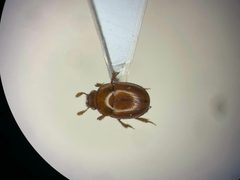
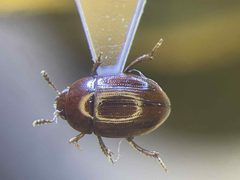
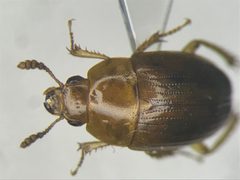
Leiodini beetles are distinguished from other Leiodidae tribes by their rounded, compact body form and with a distinct three-segmented club. They can be separated from the related tribe Pseudoliodini by the structure of the mesoventrite and the form of the prosternal process. Within Leiodini, are distinguished primarily by details of the male genitalia, tarsal formula, and punctation patterns on the .
Images
Habitat
in this tribe are predominantly found in association with fungi, including fruiting bodies of mushrooms, bracket fungi, and other decomposing fungal material. They occur in forested environments across a range of moisture regimes, from wet riparian areas to drier woodland settings. Many species are confined to specific fungal or microhabitats within decaying wood and leaf litter.
Distribution
The tribe has a worldwide distribution, with recorded from all major biogeographic regions including the Nearctic, Palearctic, Neotropical, Afrotropical, Oriental, and Australasian realms. appears highest in temperate forest regions of the Northern Hemisphere.
Diet
and larvae feed on fungal tissue, with most specializing on particular types of fruiting bodies or mycelial growth. Some species have been observed feeding on spore masses and hyphal structures within decomposing fungi.
Host Associations
- Fungi - primary food sourcevarious macrofungi including agarics and polypores
- Decaying wood - substrate for fungal growth
Life Cycle
Development occurs within fungal fruiting bodies or associated decaying organic matter. Larvae are -like and feed on fungal tissue before pupating in or near the food source. The duration varies by and environmental conditions, with multiple possible in favorable climates.
Behavior
are often found in on fungal fruiting bodies. When disturbed, many exhibit (death-feigning ), retracting their appendages and remaining motionless. Some species are capable of and may disperse to locate ephemeral fungal resources.
Ecological Role
Leiodini beetles contribute to nutrient cycling by consuming and fragmenting fungal tissue, accelerating decomposition processes. They serve as prey for various small in forest floor . Their specialized association with fungi makes them potential indicators of fungal diversity and forest health.
Human Relevance
The tribe has no direct economic importance. are occasionally encountered by mushroom collectors and are of interest to and ecologists studying fungal- relationships. Some species may be useful as bioindicators for conservation monitoring in forest .
Similar Taxa
- Pseudoliodinialso in Leiodidae but distinguished by mesoventrite structure and prosternal process
- Platypsyllinianother Leiodidae tribe with more flattened body form and different antennal structure
- Colenisiaseparate tribe within Leiodinae with distinct tarsal and genitalic characters
More Details
Taxonomic history
The authorship of Leiodini is attributed to Fleming, 1821, though the concept of the tribe has been refined through subsequent taxonomic revisions. The number of included and has expanded considerably with modern phylogenetic studies.
Research needs
Many remain poorly described, and the stages of most are unknown. specificity and ecological relationships require further investigation across the tribe.