
Anogdus
LeConte, 1866
Species Guides
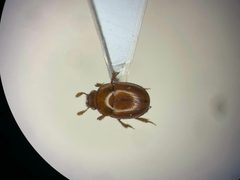
2Anogdus is a of round fungus beetles in the Leiodidae, established by LeConte in 1866. The genus currently contains at least 16 described , with a documented distribution primarily in the Nearctic region. Unpublished records indicate presence in the Neotropics, suggesting the true range is broader than currently recognized. Most species were described by Fall and Brown in the early-to-mid 20th century, with several added by Peck and Cook in 2013.
Pronunciation
How to pronounce Anogdus: //ˈæn.oʊɡ.dəs//
These audio files are automatically generated. While they are not always 100% accurate, they are a good starting point.
Identification
Members of Anogdus can be distinguished from other Leiodidae by the combination of: body form compact and rounded; with distinct club; and specific male genitalic characters used in -level determinations. The genus is placed in tribe Leiodini, subtribe Anogdina, and is most similar to other anogdine genera such as Cyrtodirus and Agathidium, from which it differs in details of antennal structure and male genitalia . Species identifications require examination of male genitalia and are detailed in Peck and Cook (2013).
Images
Distribution
Primarily Nearctic in distribution, with recorded from the United States and likely Canada. The extends into Mexico, with unpublished material confirming Neotropical presence. Specific species distributions include: eastern North America (A. obsoletus, A. capitatus), southwestern United States (A. cochise, A. huachuca, A. texanus, A. tridens), and Florida (A. alachua, A. rileyi).
Similar Taxa
- AgathidiumBoth are round fungus beetles in tribe Leiodini with compact body form; distinguished by antennal club structure and male genitalic characters.
- CyrtodirusShares subtribe Anogdina with Anogdus; separation requires detailed examination of mouthpart and genitalic .
More Details
Taxonomic history
The was revised by Peck and Cook (2013), who described five new and provided keys to all known species. The subtribe Anogdina was established to accommodate Anogdus and related genera.
Research needs
The Neotropical fauna remains poorly documented; future collections and study are expected to reveal additional and expand known ranges of existing species.