
Diplotaxis sordida
(Say, 1825)
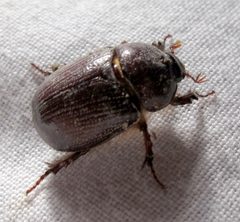
Diplotaxis sordida is a of scarab beetle in the Scarabaeidae, first described by Thomas Say in 1825. It is a small found across eastern and central North America, from Canada through the eastern United States. The species is part of the diverse Diplotaxis, which includes numerous similar small scarab species that are often attracted to lights at night. Like other members of its genus, D. sordida is likely nocturnally active and associated with herbaceous vegetation.
Pronunciation
How to pronounce Diplotaxis sordida: /ˌdɪploʊˈtæksɪs ˈsɔrdɪdə/
These audio files are automatically generated. While they are not always 100% accurate, they are a good starting point.
Identification
Diplotaxis sordida is one of many small, similar in the Diplotaxis that require careful examination for positive identification. Species in this genus are small scarab beetles, typically under 10 mm in length, with dull to moderately shiny and relatively unmodified legs. Definitive identification of D. sordida likely requires examination of male genitalia or other subtle morphological characters, as external features overlap substantially with such as D. bidentata and D. tristis. The specific epithet "sordida" (meaning dirty or foul) may refer to a dull, non-metallic, or somewhat soiled appearance of the compared to related species.
Images
Habitat
Based on collection records and the of related Diplotaxis , D. sordida likely inhabits open, grassy or herbaceous including prairies, meadows, pastures, and disturbed areas. The species has been collected in sand prairie remnants in Missouri and appears to favor well-drained soils. are attracted to lights at night, suggesting activity patterns typical of in this .
Distribution
Nearctic region: Canada (Manitoba, Ontario, Quebec) and eastern United States (Connecticut, Indiana, Maine, Maryland, Massachusetts, Michigan, Mississippi, New Hampshire, New Jersey, New York, North Carolina, Pennsylvania, Tennessee, Virginia, Wisconsin). The shows a primarily eastern and central North American distribution, with records extending from the Atlantic coast west to the Great Plains and from southern Canada to the Gulf Coast.
Seasonality
have been documented from May through September, with peak activity likely occurring during summer months. The is attracted to blacklights at night, with records from June and August in New Mexico and Missouri.
Behavior
are and attracted to artificial lights, including blacklights and mercury vapor lights. This is shared with other Diplotaxis and many scarab beetles in the Melolonthinae. A closely related , Diplotaxis sp., has been observed congregating on low vegetation at night, apparently to intercept trails while searching for mates.
Human Relevance
Like many small scarab beetles, D. sordida has minimal direct economic importance. It may occasionally be encountered by entomologists and naturalists during insect surveys using light traps. The contributes to overall scarab beetle diversity in its native and may serve as prey for nocturnal .
Similar Taxa
- Diplotaxis bidentataOverlapping distribution and similar small size; requires genital dissection for reliable separation
- Diplotaxis tristisSimilar dull coloration and preferences; external often insufficient for identification
- Other small Melolonthinae chafersNumerous of small scarabs share size range and general appearance; examination of antennal club structure and other details needed
More Details
Taxonomic note
Diplotaxis is a large and taxonomically challenging with many similar . The group is in need of modern revision, and identifications in museum collections and databases should be treated with caution. The specific epithet "sordida" was established by Thomas Say in 1825, making this one of the earlier described species in the genus.
Collection methods
Based on observations of , D. sordida is most effectively collected using blacklight or mercury vapor light traps at night, particularly in open grassy . Sweeping low herbaceous vegetation during daylight may also yield .