
Xyloryctes
Hope, 1837
rhinoceros beetles
Species Guides
2- Xyloryctes jamaicensis(Eastern Rhinoceros Beetle)
- Xyloryctes thestalus(Western Rhinoceros Beetle)
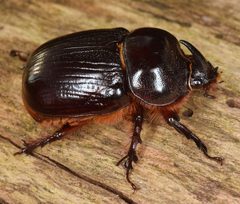
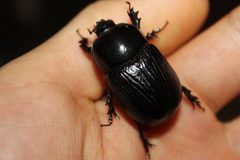
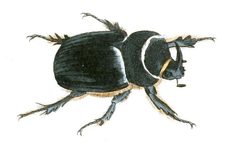
Xyloryctes is a of rhinoceros beetles in the Scarabaeidae, tribe Oryctini, Dynastinae. The genus contains approximately 13 described distributed primarily in the Nearctic and Neotropical regions. are characterized by prominent cephalic horns, particularly in males, and are nocturnally active, frequently attracted to artificial lights. The genus has been documented as a for the giant thorn-headed worm of swine (Macracanthorhynchus hirudinaceus), with X. satyrus representing a newly recorded for this acanthocephalan .
Pronunciation
How to pronounce Xyloryctes: //zaɪloʊˈrɪktiːz//
These audio files are automatically generated. While they are not always 100% accurate, they are a good starting point.
Identification
Xyloryctes are distinguished from other North American rhinoceros beetles by their relatively small to medium size within Dynastinae, paired cephalic horns in males (typically with a single horn and paired or horns), and the structure of the pronotum which lacks the extreme modifications seen in such as Dynastes or Strategus. Females lack horns and possess a more convex, unmodified . Species-level identification requires examination of male genitalia and detailed horn , including the number, arrangement, and curvature of cephalic projections. X. thestalus (western rhinoceros ) and X. jamaicensis (eastern rhinoceros beetle) represent the most commonly encountered species in western and eastern North America respectively, with the former showing more extensive western distribution into juniper-oak-pinyon woodlands.
Images
Habitat
within Xyloryctes occupy a range of woodland and forest . X. jamaicensis has been documented in woodlots in southern Ontario, specifically in deciduous forest associations near Lake Erie. X. thestalus occurs in juniper-oak-pinyon woodlands, montane grasslands, and riparian corridors in the southwestern United States and northern Mexico. The shows affinity for areas with sandy or well-drained soils suitable for larval development, and are frequently encountered in association with oak (Quercus), juniper (Juniperus), and pinyon pine (Pinus edulis) .
Distribution
The Xyloryctes is distributed across the Nearctic and Neotropical regions. X. jamaicensis occurs in eastern North America, with records from southern Ontario, Canada, southward through the eastern United States. X. thestalus ranges across the southwestern United States (New Mexico, Arizona, western Texas) and northern Mexico. Additional extend the generic distribution into Central America. GBIF records indicate presence in Vermont and broader Neotropical distribution, though specific country-level data for many species remains sparse.
Seasonality
activity varies by and latitude. X. jamaicensis has been observed from June through September in southern Ontario, with peak activity in mid-summer. X. thestalus is active from late June through August in the southwestern United States, with activity frequently recorded following summer rains. The species shows increased attraction to lights during periods of monsoonal moisture in July and August.
Host Associations
- Macracanthorhynchus hirudinaceus - intermediate ()X. satyrus documented as new insect for this acanthocephalan of swine; larval beetles likely ingest parasite
Behavior
are and strongly attracted to artificial light sources, including ultraviolet lights, mercury vapor lamps, and porch lights. Males exhibit clumsy and have been observed colliding with obstacles near light sources. Both sexes are attracted to lights, though males appear more frequently in light trap . Adults do not feed actively and rely on fat reserves accumulated during larval development. Males use cephalic horns in intraspecific combat for access to females, though detailed behavioral observations are limited.
Ecological Role
Larvae function as saprophagous decomposers in forest and woodland , feeding on decaying organic matter and contributing to nutrient cycling and soil formation. The serves as an intermediate for the giant thorn-headed worm of swine, a parasitic acanthocephalan, thereby participating in transmission cycles between and vertebrate hosts. and activity patterns may provide seasonal food resources for including birds, bats, and small mammals.
Human Relevance
Xyloryctes are collected by entomologists and enthusiasts due to their distinctive horned and relative accessibility at light sources. The has minor veterinary significance as a for Macracanthorhynchus hirudinaceus, a of swine. are occasionally encountered in residential areas when attracted to outdoor lighting, where their large size and horned appearance generate public interest. The western rhinoceros beetle (X. thestalus) is among the most frequently photographed and documented species in citizen science platforms in the southwestern United States.
Similar Taxa
- DynastesBoth are North American rhinoceros beetles with prominent male horns; Xyloryctes is smaller, with less elaborate horn development and different pronotal structure
- StrategusSimilar size range and preferences; Strategus males possess three distinct pronotal horns versus the paired cephalic horns of Xyloryctes, and show different geographic distribution patterns
- Phileurus scarabs with some superficial similarity; Phileurus lacks the pronounced in horn development and occupies different
More Details
Taxonomic history
The was established by Hope in 1837. boundaries within Xyloryctes have been historically problematic, with X. jamaicensis and X. thestalus representing the most well-defined and geographically distinct species. The genus belongs to the tribe Oryctini, which includes the majority of New World rhinoceros beetles.
Research significance
Xyloryctes has served as a study system for understanding and weapon evolution in insects, with research on related dynastine beetles informing hypotheses about horn function and development. The also provides a model for understanding - relationships, specifically the transmission of acanthocephalan worms through scarabaeid intermediate hosts.
Sources and further reading
- BugGuide
- Wikipedia
- GBIF taxonomy match
- iNaturalist taxon
- NCBI Taxonomy
- Catalogue of Life
- The Beetles and the Sticks | Bug Squad
- Beetle Mania to Descend on the Bohart | Bug Squad
- Host and a Parasite: Battle of Sand Field Crickets vs. Horsehair Worms | Bug Squad
- Bug Eric: New Mexico Night Bugs
- Bug Eric: New Mexico Dragonfly Blitz - Day 1
- Mantispidae | Beetles In The Bush
- Notes on the Ecology of Xyloryctes Jamaicensis (Coleoptera: Scarabaeidae) in Southern Ontario
- Another Insect Vector of the Giant Thorn-Headed Worm of Swine* Xyloryctes satyrus Fabricius (Scarabaeidae) Both Genus and Species New to the Host List of this Parasite.