
Platycerus
Geoffroy, 1762
Species Guides
5- Platycerus cribripennis
- Platycerus depressus(Aspen stag beetle (eastern))
- Platycerus marginalis(Aspen stag beetle)
- Platycerus oregonensis(Oregon Stag Beetle)
- Platycerus quercus(Oak Stag Beetle)
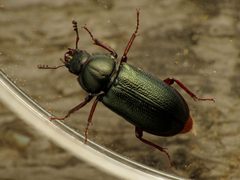
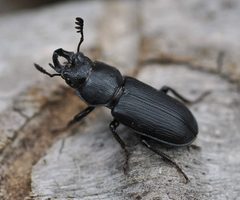
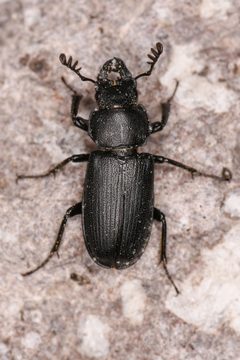
Platycerus is a of small stag beetles in the Lucanidae, comprising over 50 distributed across deciduous forests of the Northern Hemisphere. Members are saproxylic, developing in deadwood of cool, temperate broadleaf forests. are elusive with short periods and cryptic habits, making them generally uncommon and locally rare in many regions.
Pronunciation
How to pronounce Platycerus: //plæˈtɪsɛrəs//
These audio files are automatically generated. While they are not always 100% accurate, they are a good starting point.
Identification
Small-bodied stag beetles distinguished from larger Lucanidae by reduced development in males and compact body form. -level identification requires examination of external larval characters for third-instar larvae or morphological features. Oviposition scars on deadwood surfaces can indicate presence during surveys.
Images
Habitat
Cool, temperate broadleaf forests with humid deadwood; hill and mountain forests. Development occurs in deadwood of slightly advanced decay, particularly logs with diameter less than 50 cm. P. caprea prefers sites with greater deadwood abundance in cooler areas; P. caraboides shows less dependence on deadwood quantity.
Distribution
Deciduous forests of the Northern Hemisphere; Mediterranean Basin with 7 , 4 in Europe (P. caprea, P. caraboides caraboides, P. pseudocaprea, P. spinifer). In Italy: mainland only, absent from islands; 18 administrative regions; latitudinal range 35.490° to 47.093° N; elevations approximately 900–1800 m based on specimen records.
Seasonality
Short periods; activity timing varies by and latitude.
Diet
Larvae feed on woody material colonized by fungi and other microorganisms.
Life Cycle
deposited in deadwood with oviposition scars visible on wood surface. Larval development occurs in deadwood of slightly advanced decay; third-instar larvae identifiable by external characters. within deadwood; emerge with short periods.
Behavior
Cryptic habits; elusive and difficult to detect. Survey method requires direct search of deadwood material including logs, stumps, and snags, with identification of oviposition scars.
Ecological Role
Saproxylic contributing to forest dynamics in deadwood-rich environments. Important element of saproxylic ; preyed upon by , , and . Contribute to wood decomposition processes.
Similar Taxa
More Details
Survey methodology
Effective detection requires systematic search of deadwood material rather than passive trapping due to cryptic and short periods.